Why does my white paint look yellow?
It can be the white itself, what sits next to it, your light, or paint that has aged. Check in this order.
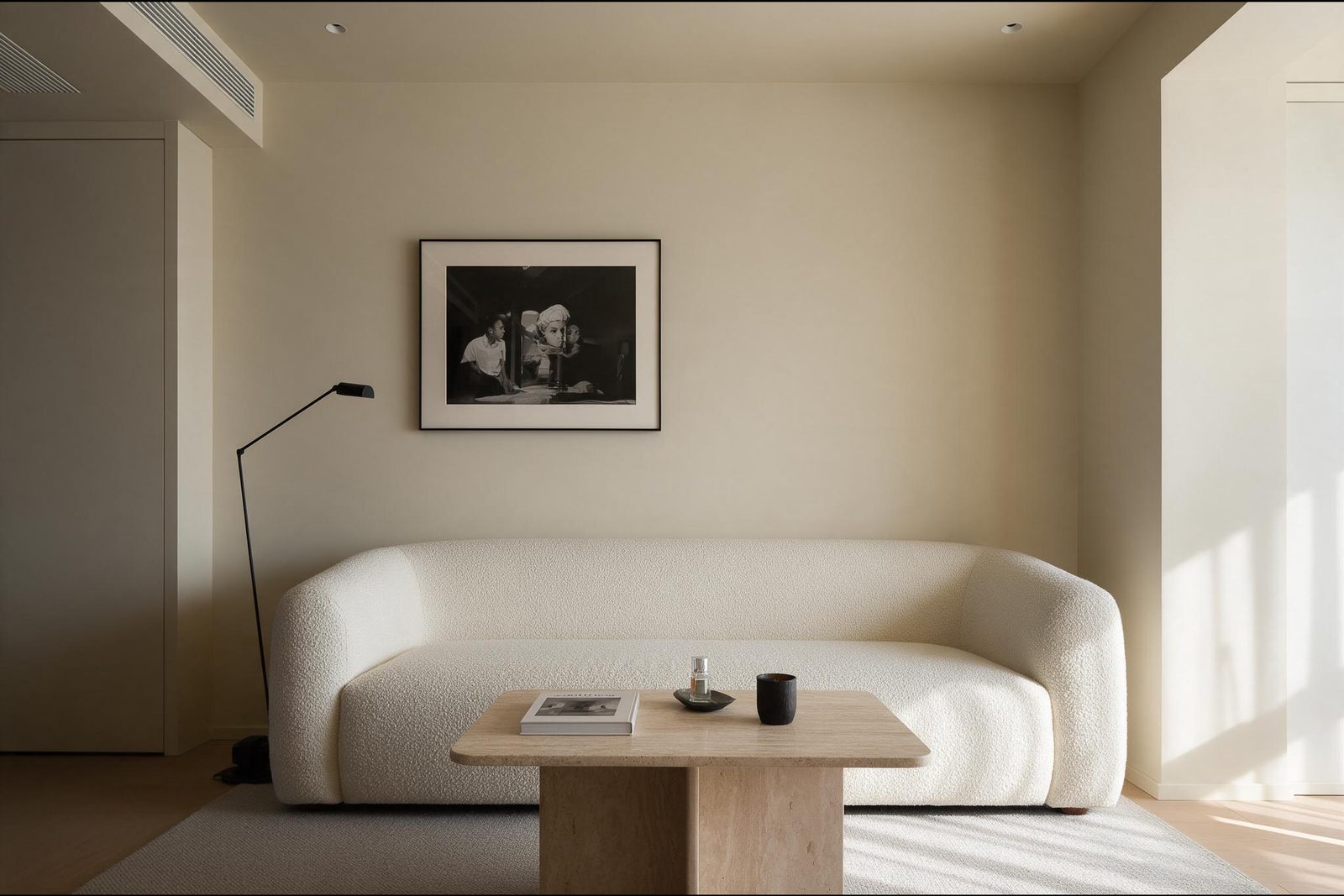
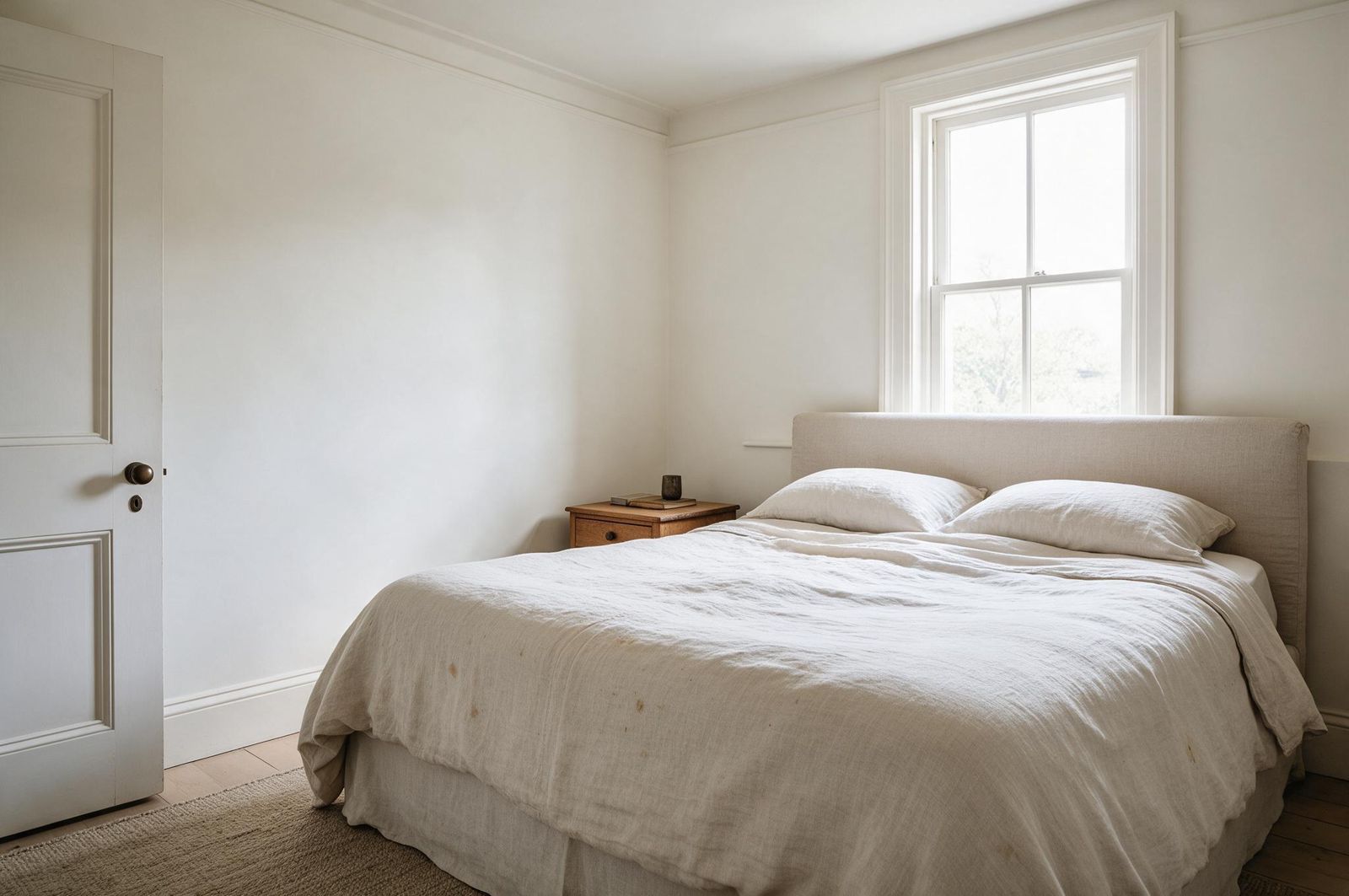
Room images are illustrations, not client projects or exact paint matches.
White paint can look yellow because the white has a warm undertone, because something nearby is adding warmth, because of your light, or because the paint film has aged. Work out which one you have before you buy another white. A new color won't fix a bulb or a reflection.
The likely causes
The white's own undertone
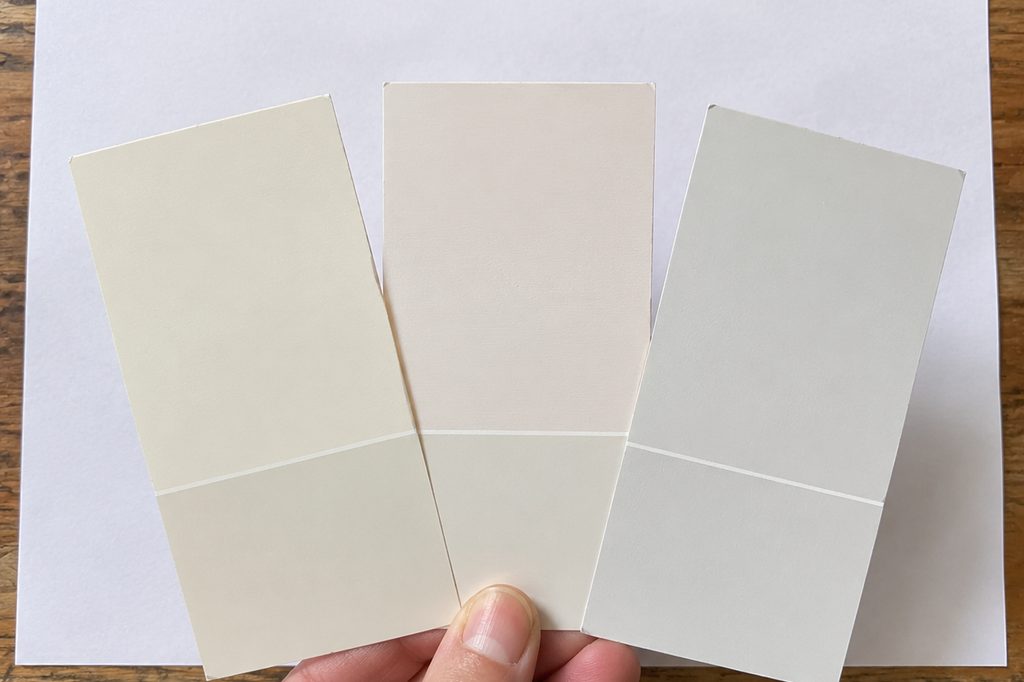
Many popular whites are warm on purpose. Hold the chip on plain white printer paper in daylight. If it looks cream or buttery next to the paper, that warmth may show more across a whole room.
What sits next to it
Your white paint can look warmer beside oak floors, warm stone, a cream counter or beige tile. A very crisp white trim or ceiling can also make a soft white wall look yellow by comparison.
Reflected color
Light bounces. A wood floor, a terracotta roof or brick wall outside, a yellow rug or a sunlit yellow room next door can all tint a white wall. Green outside can push it a different way.
Bulbs
Bulbs with lower kelvin numbers look warmer and more yellow. Some LED bulbs get warmer still when dimmed. The U.S. Department of Energy's note on color-tunable LEDs explains the effect.
Time of day
Late sun is often warm, and rooms with west windows can look much more golden in the evening than at noon. Strong south light can do something similar.
Paint that has aged
Sherwin-Williams notes that alkyd and oil-based paints tend to yellow, particularly in areas not exposed to sunlight. It also lists heat from stoves, radiators and ducts, lack of light, tobacco and other contaminants, and moisture. This is a change in the paint film, which is different from a warm color.
Check in this order before repainting
- Compare a covered spot. Look behind a picture, inside a closet and on an open wall. A real difference can mean the paint has changed since it went on. Hidden spots can yellow more with oil-based paint.
- Turn off the lamps. Look at the wall in daylight at two or three times of day.
- Check the bulbs. Read the kelvin number, make sure they match, and try one cooler step (for example 3000K instead of 2700K) on two evenings.
- Block the neighbors. Hold white poster board between the wall and the floor, rug or other strong color. See if the yellow eases.
- Hold white paper to the wall. It gives your eye a reference point.
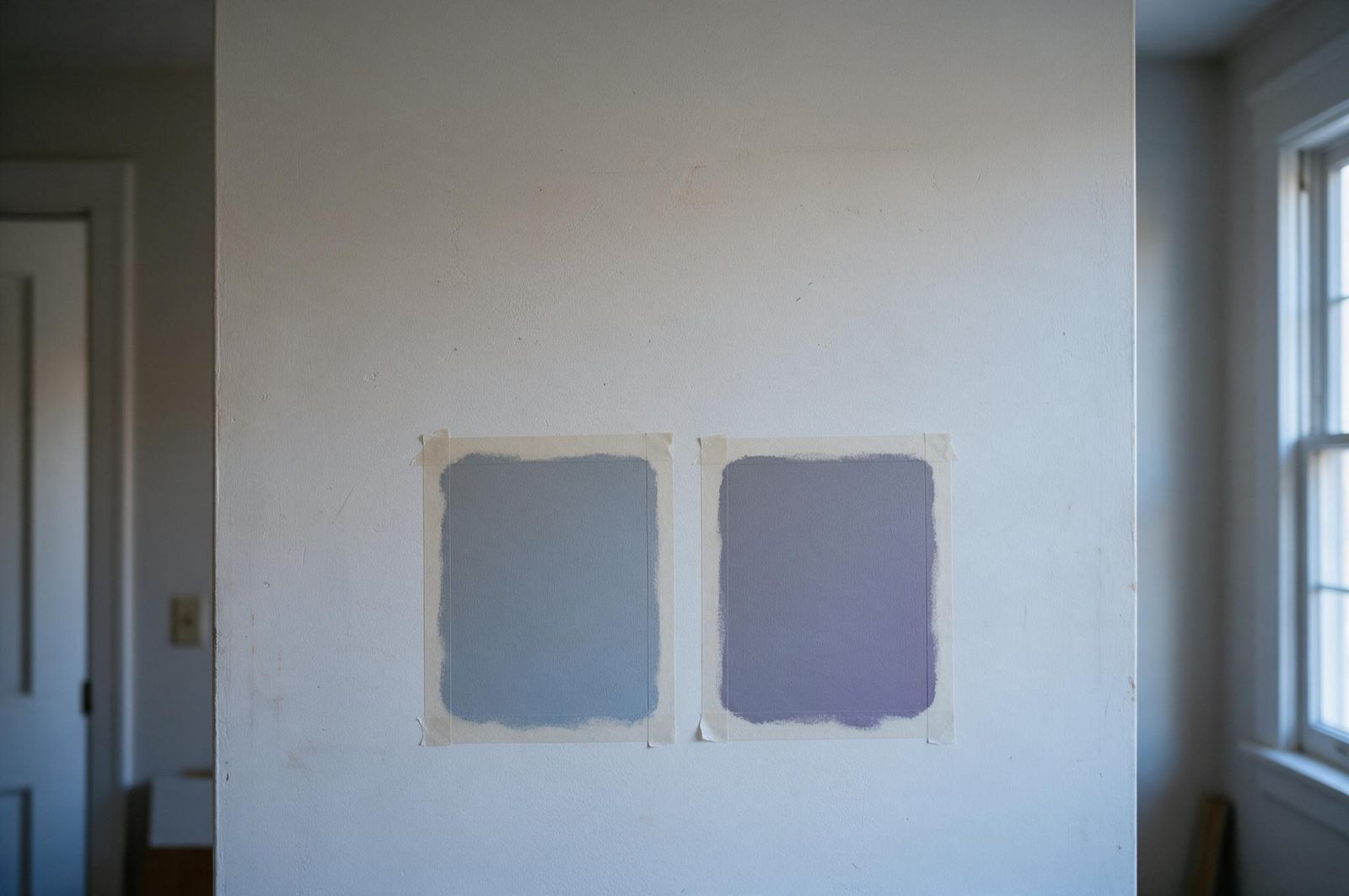
- Sample two other whites large, beside the current wall and next to your floor and trim.
If you do repaint
If the problem is color, compare a more balanced or cooler white against your current one. SW Pure White and BM Chantilly Lace are two samples that often read crisper than creamy whites. Either can feel cold in a dim north room, so test them there.
If the paint has aged, fix the cause too. Sherwin-Williams says repainting with a latex paint will reduce the amount of yellowing, but a new coat will likely yellow as well if the conditions that caused it continue. If you aren't sure what's on the wall, ask a paint store before choosing a primer. In older homes, check lead-safe practices before sanding.
You may not need to repaint if the yellow shows only under one kind of bulb, or if it only appears for a short time in warm evening sun and you don't mind it.
LRVs are rounded from the paint makers' own color pages, checked November 28, 2026. Swatches on screen are approximate. Test real paint in your own room before you buy.
Related: five white paints to sample first, why gray walls look blue and planning one trim color for the house.