How to pick a whole-house color palette that flows
The five-color system I use so every doorway looks like it belongs to the same house.
 Whole House Palette · November 2026
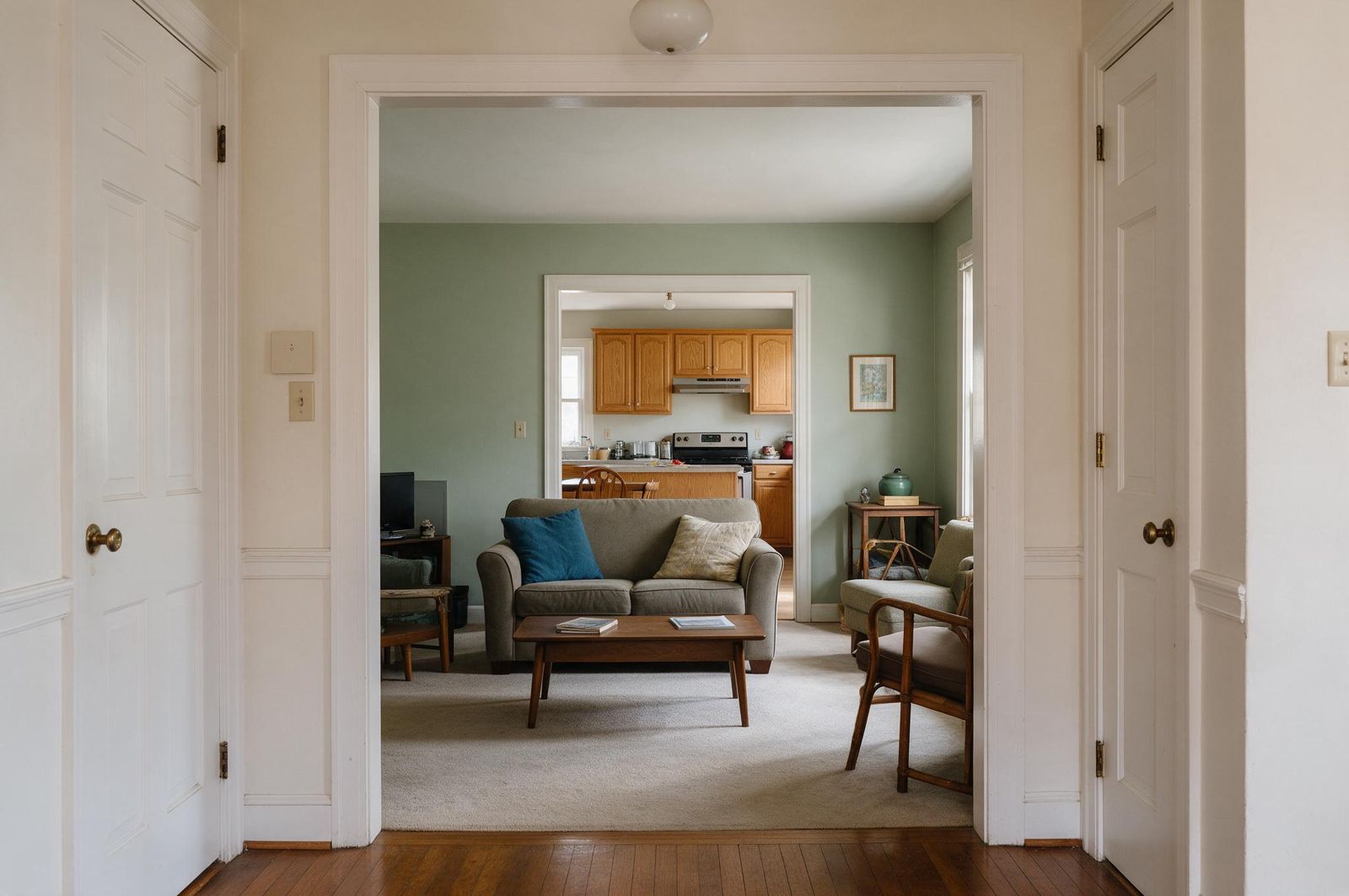
Here is a thing nobody tells you when you buy a house: you are not choosing paint for rooms. You are choosing paint for doorways. Because that is where you actually see color, standing in one room and looking into the next.
When a house feels "off," it is almost never one bad color. It is three good colors that do not know each other. A warm beige living room, a cool grey hallway and a pink-white bedroom, each fine alone, all fighting at the doors.
So here is the system I use with clients. Five colors, sometimes six. That is it.
Step 1: pick one main neutral (60%)
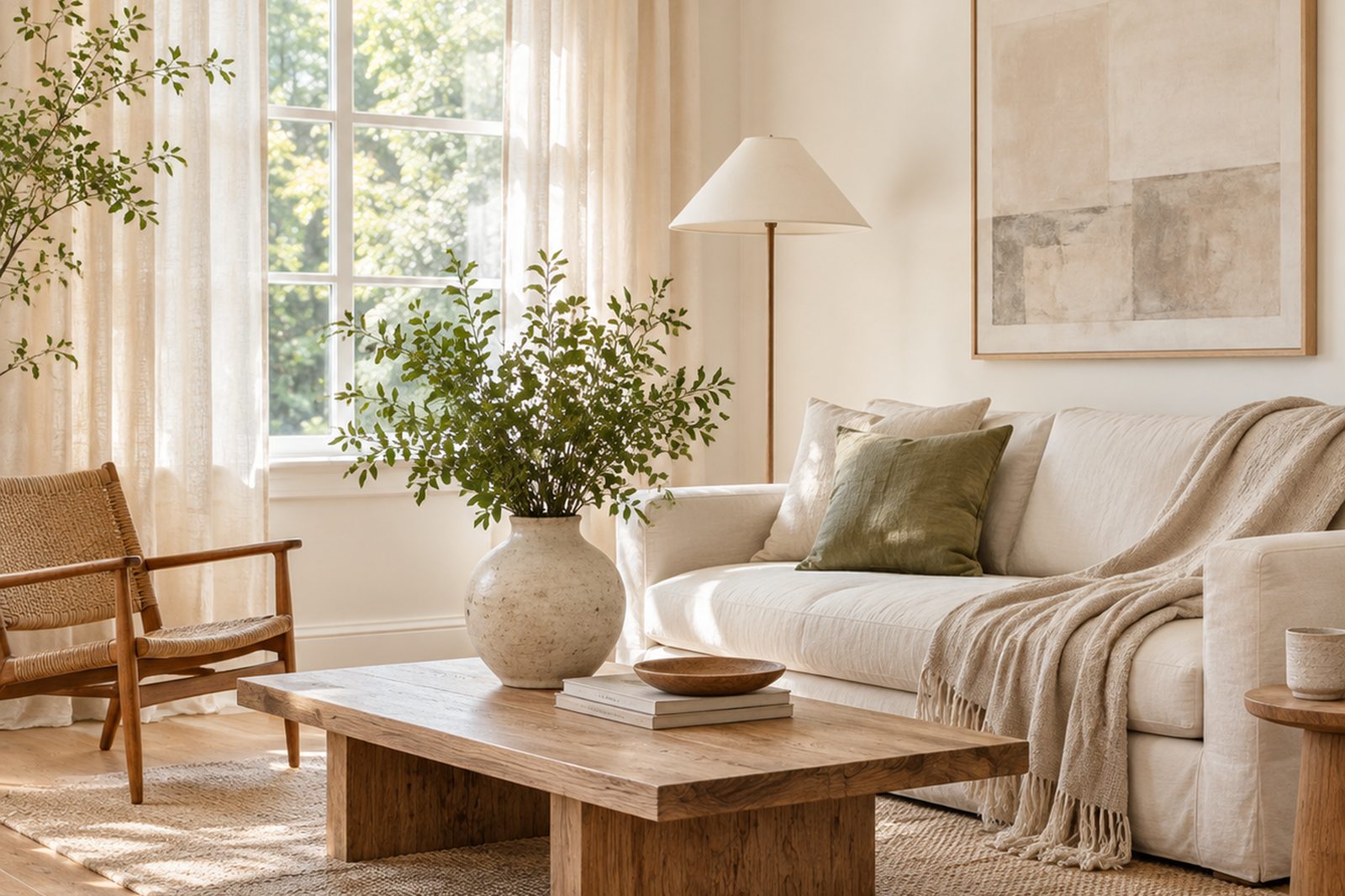
This is the color for the hallways, the open living spaces and any room you cannot decide about. It needs to work in your darkest room and your brightest one, so test it in both.
Pick the undertone here, because everything else will follow it. Warm house or cool house? Decide once.
Step 2: one trim and ceiling white
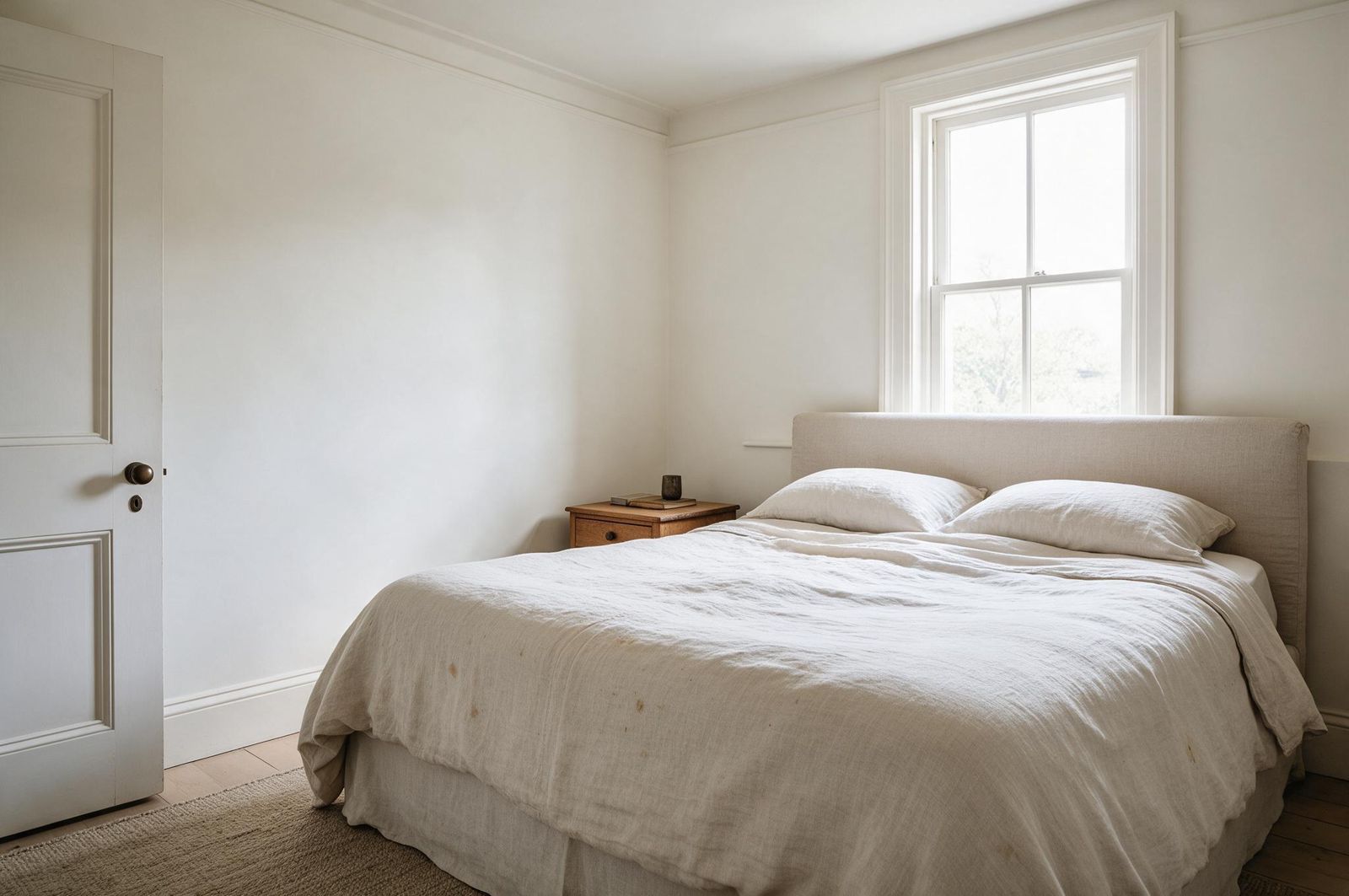
One white for every door, baseboard and ceiling in the house. Same undertone as the main neutral. This single decision does more for flow than anything else on this list, because trim is the one thing you see in every room.
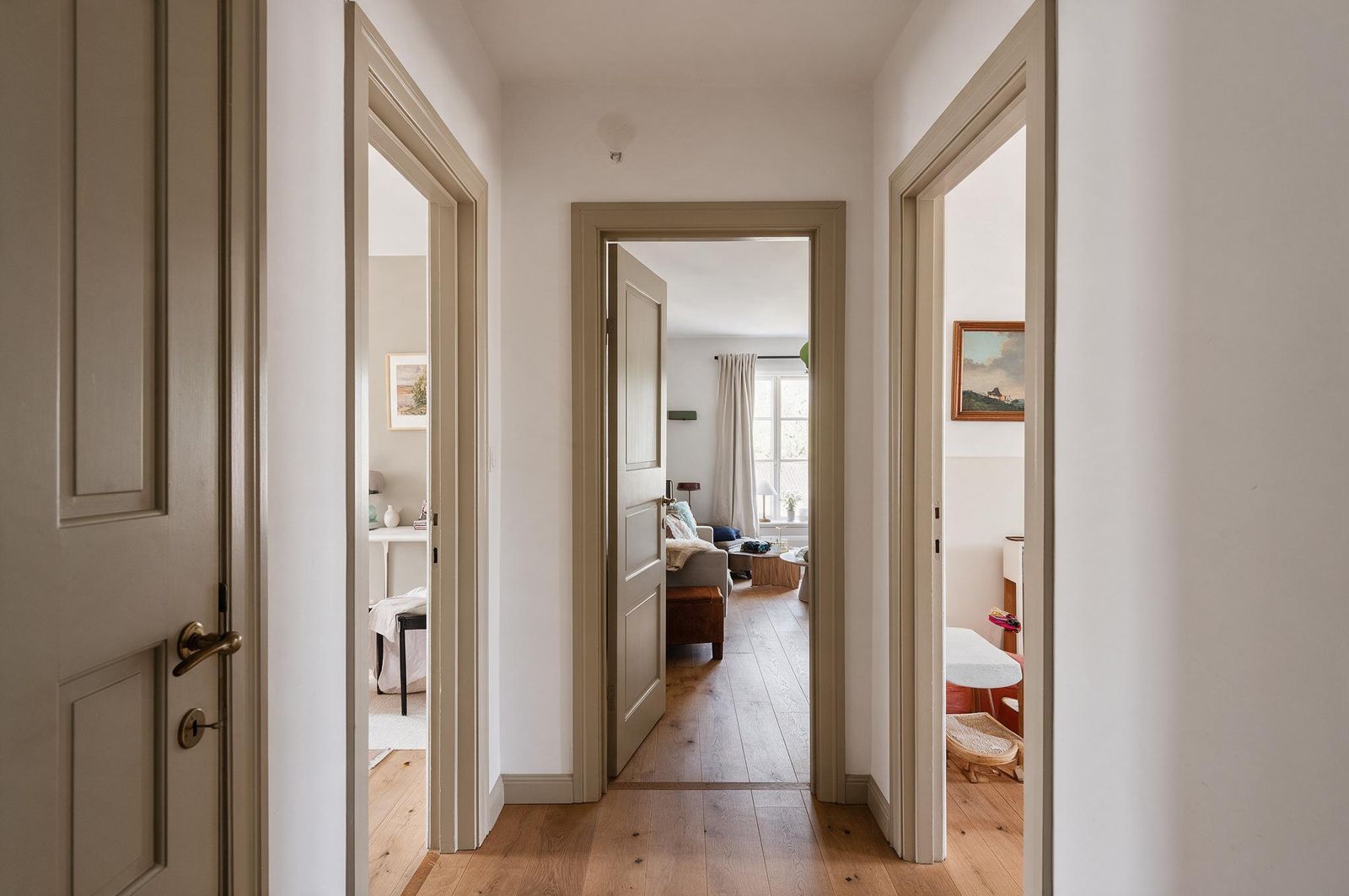
Step 3: two or three accent colors (30%)
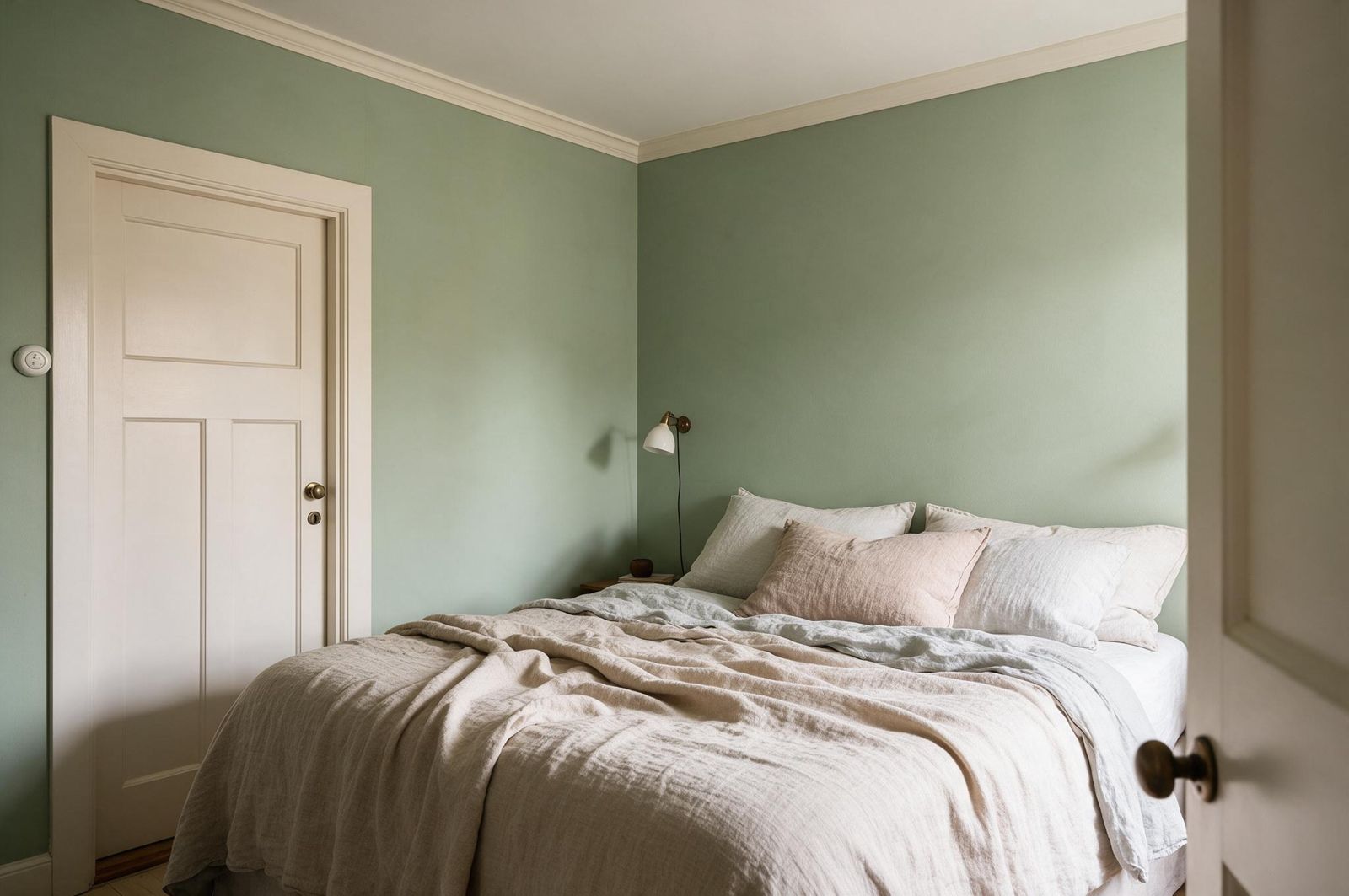
These go in the rooms with doors: bedrooms, the office, a dining room. They should feel like cousins of the main neutral, darker or lighter versions of the same family, or a soft color with the same warmth.
Step 4: one deep color (10%)
One dark color, used in small doses: the front door, a kitchen island, a powder room, a study. It gives the house a backbone. Without it, a soft palette can feel a little washed out.
Step 5: walk the doorways
Print a simple floor plan, or sketch one. Write a color in each room. Then stand in every doorway in your head and ask: can I see more than two colors from here? If yes, simplify. If every doorway shows the main neutral plus at most one accent, the house will flow.
An example palette
- Main neutral: SW Agreeable Gray SW 7029, hallways, living, kitchen walls
- Trim and ceilings: SW Pure White SW 7005, everywhere
- Accent 1: BM October Mist 1495, main bedroom
- Accent 2: SW Sea Salt SW 6204, bathrooms
- Deep: BM Webster Green HC-130, front door and study
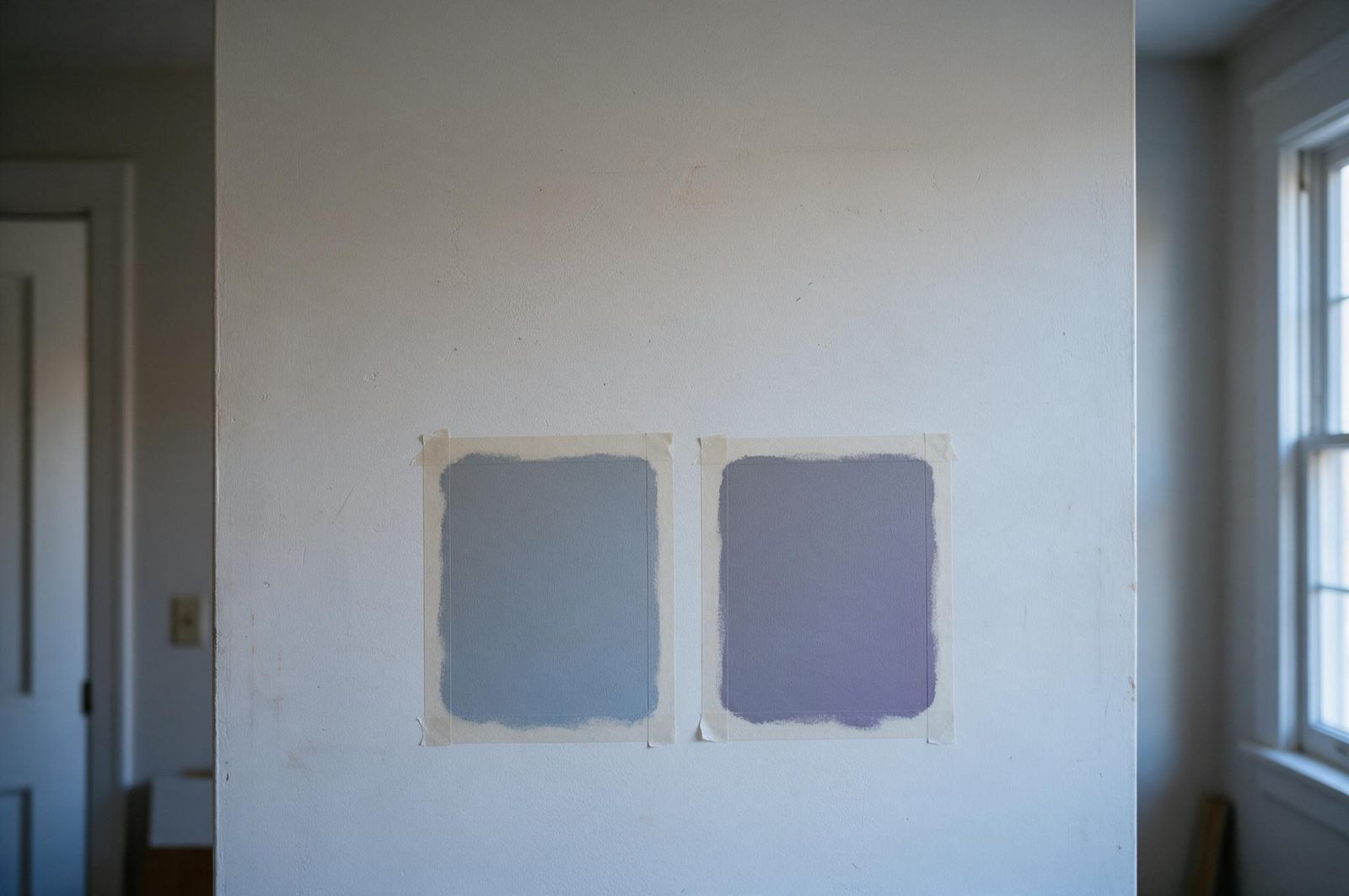
Codes and LRVs come from the brands' own listings. Test every one on a white sample board in the actual rooms before buying.