Pale Oak by Benjamin Moore: an architect's honest review
Undertones, LRV, how it shifts in north and south light, and the colors I pair with it.
 Whole House Palette · November 2026
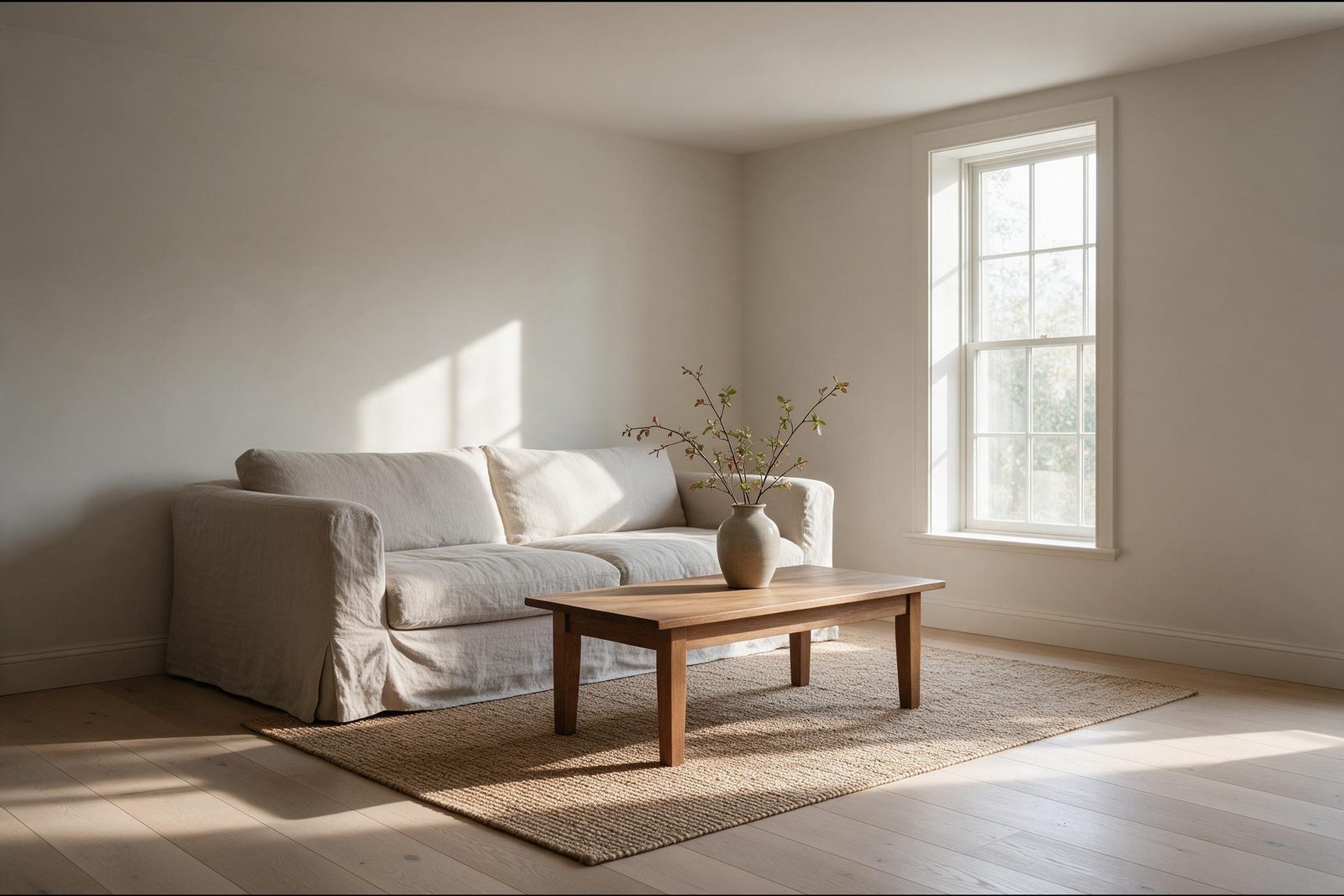
Pale Oak is the color clients bring to me already half decided. They have seen it in a friend's living room or on a hundred saved pins, and they want to know one thing: will it look like that in my house? Usually yes. But not always, and the reasons are worth two minutes before you buy five gallons.
What Pale Oak actually is
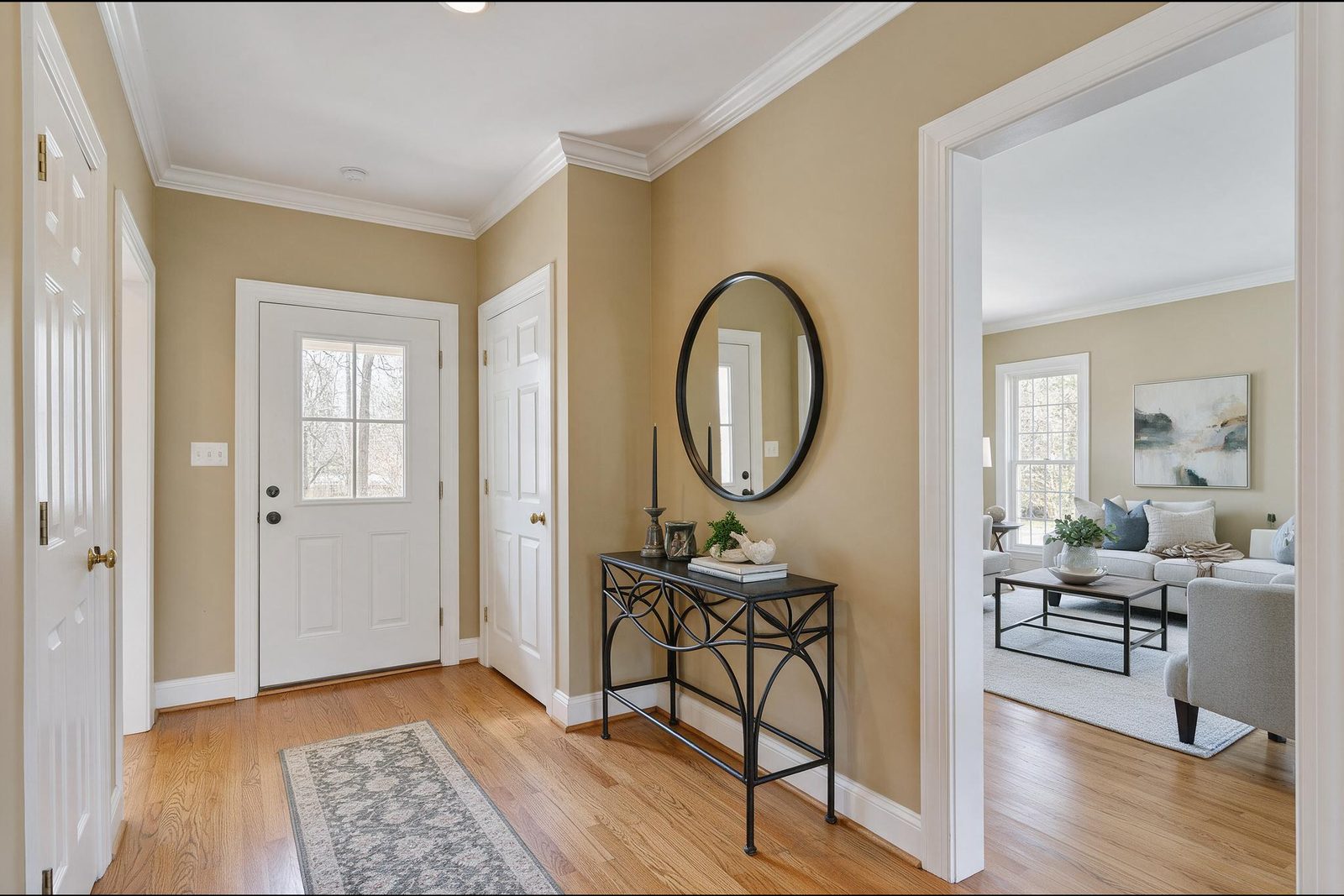
Benjamin Moore calls it a neutral with warm grey undertones. In practice it is an off-white with a little weight: pale enough to bounce light around, dark enough that white trim shows up against it. That middle position is why it works in so many rooms. It never shouts and it never looks like primer.
How it changes with light
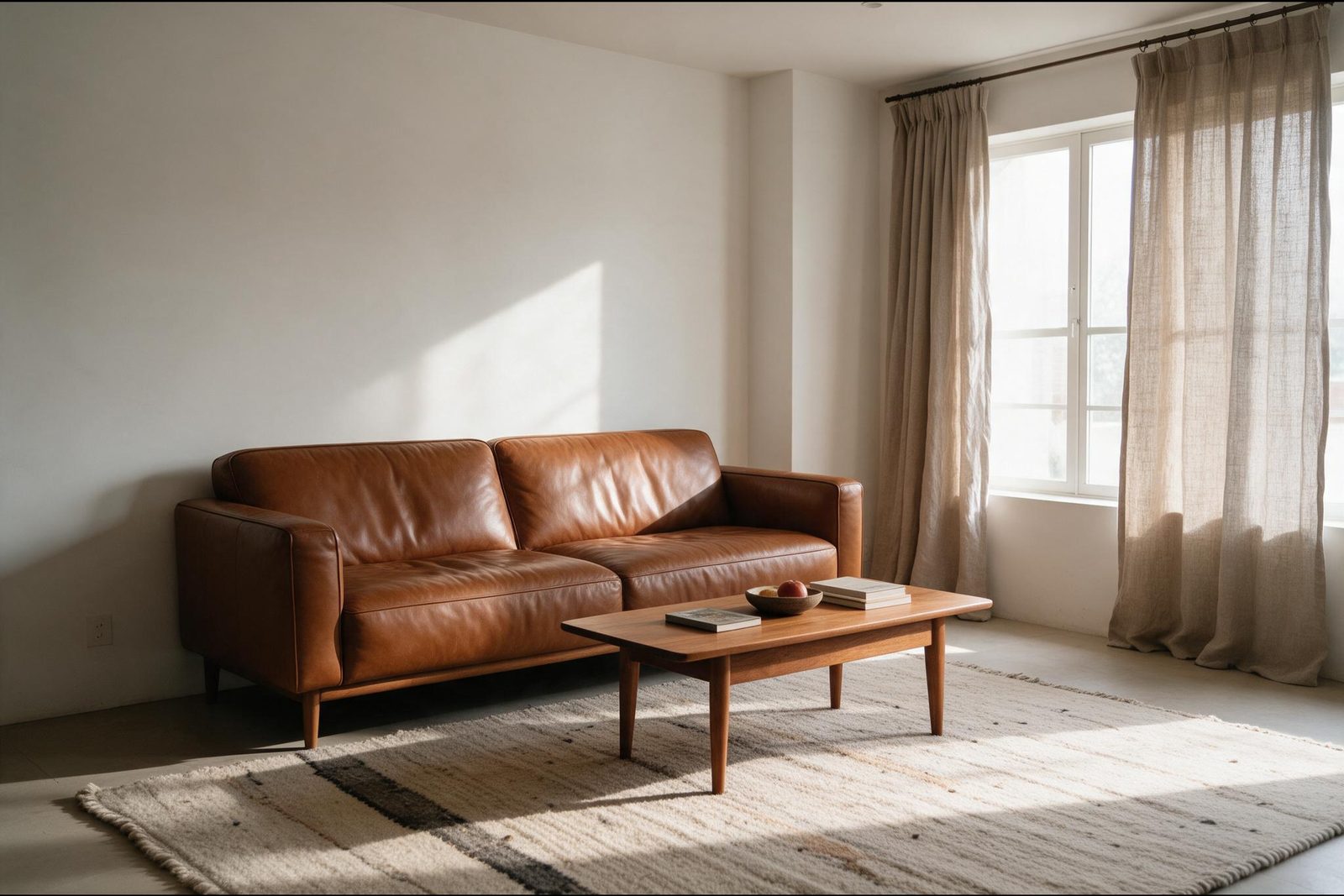
This is the part the photos hide. In a south or west room, Pale Oak looks warm, almost creamy, especially in late afternoon. In a north-facing room it cools down and some people see a faint pink or violet cast, the way many greiges do in blue daylight. Neither is wrong, but you should know which one you are getting.
My rule: if the room faces north and you dislike any hint of pink, test Pale Oak next to Balboa Mist. It is close in depth and reads a touch cooler and greyer.
Trim and ceiling
Pale Oak is light, so the trim choice decides how finished the room looks.
White Dove keeps everything gentle. Chantilly Lace makes the walls read a little darker and more deliberate. For ceilings I use the trim white, or Pale Oak at a lighter strength if the room is low and you want the walls to wrap over.
Cabinets and kitchens
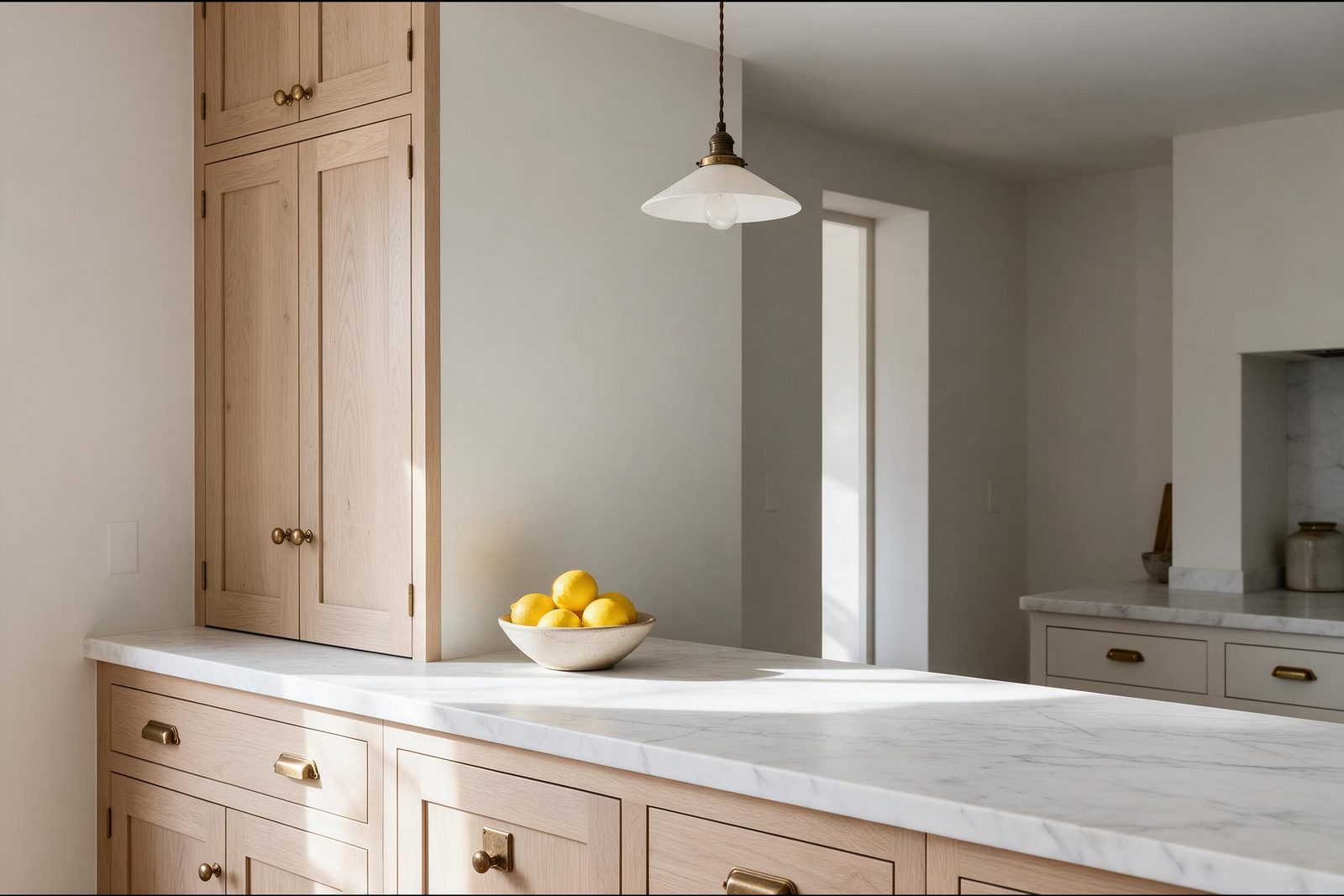
Pale Oak is lovely in a kitchen with white oak, walnut or honed marble. It is less happy next to very orange wood, where the faint violet note can turn dull. If you have honey oak, a warmer neutral is a safer partner; I wrote about that in greige with honey oak cabinets.
Colors that go with it
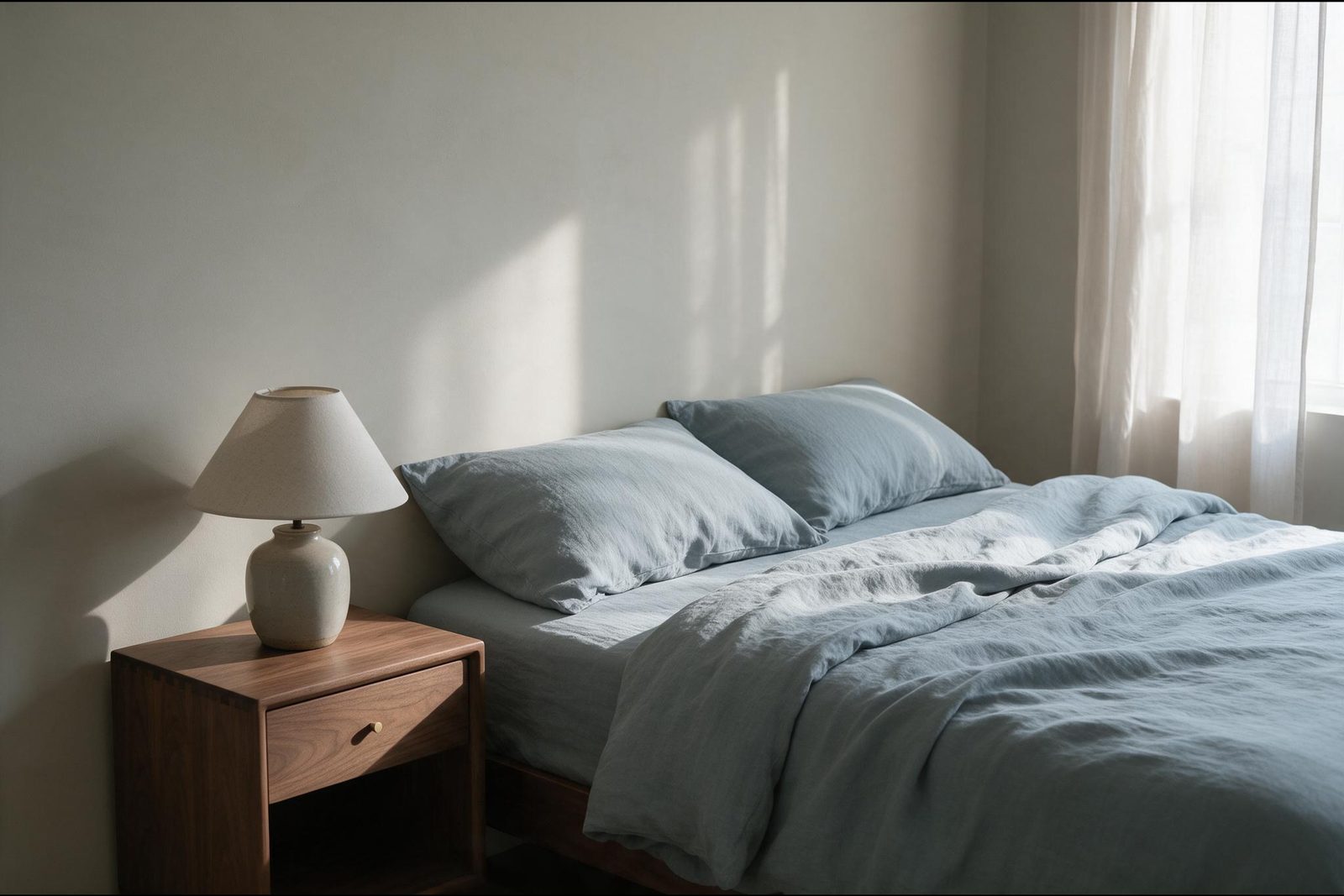
Because Pale Oak sits between warm and cool, it takes accents from both sides. The pairings I use most:
- Next room over: Edgecomb Gray or Revere Pewter, one step deeper in the same greige family, so the house flows.
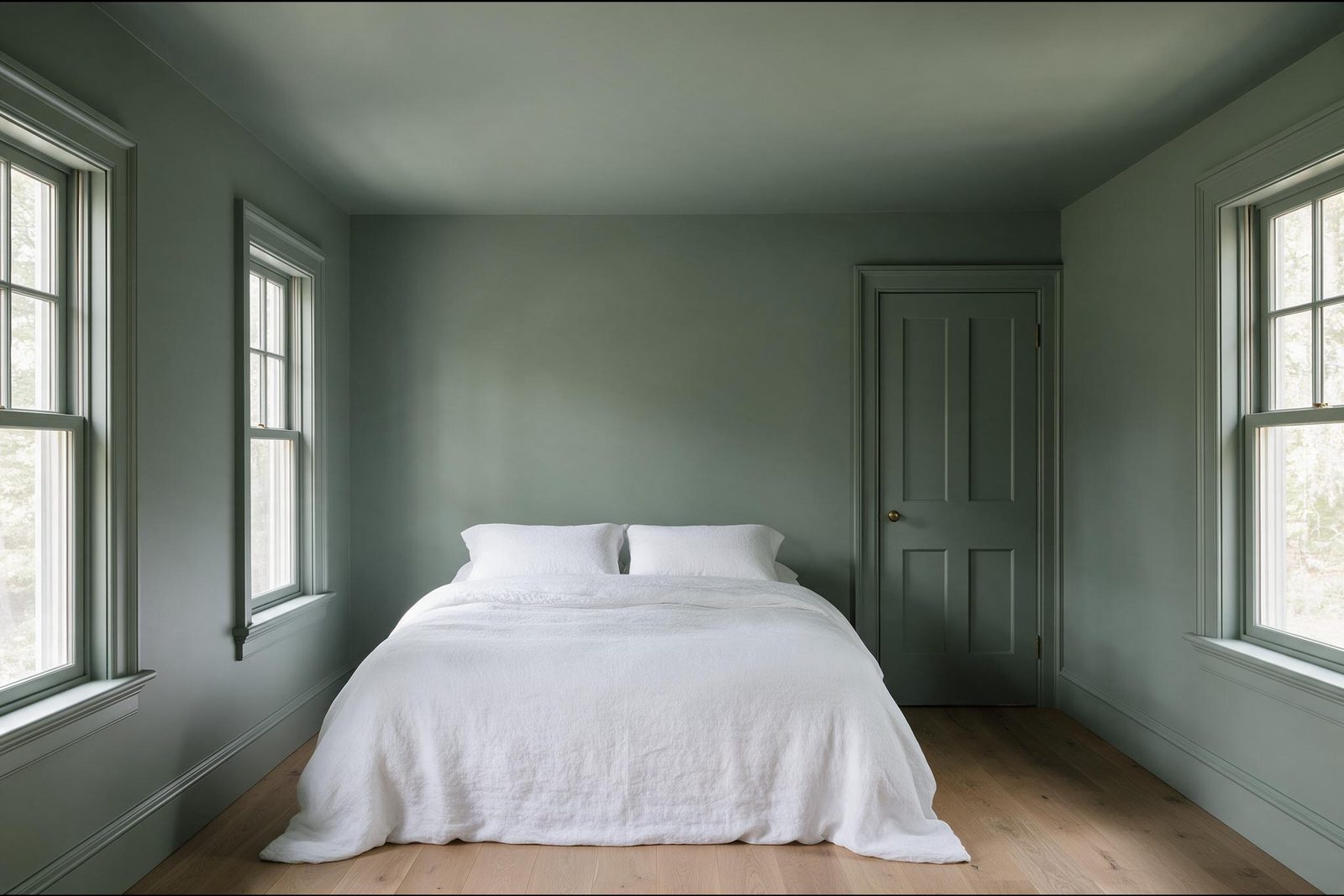
- Blue-greys: bedding, a bedroom wall or a powder room in a muted blue-grey looks calm and fresh against it.
- Deep accent: a dark green or a warm bronze on an island, a door or a study.
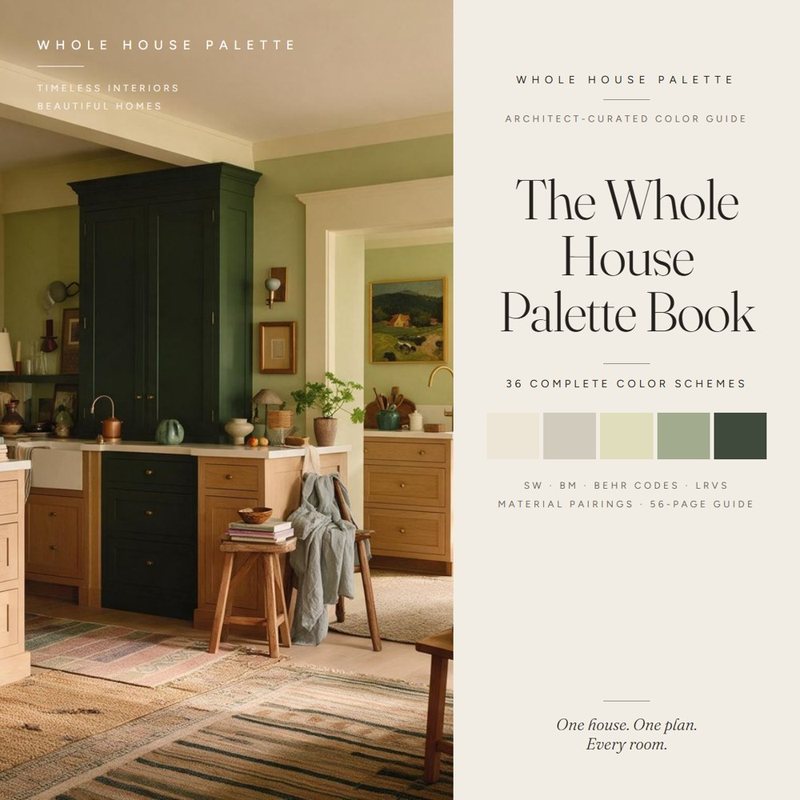
If you want those decisions made room by room, my Whole House Palette Book has 36 complete schemes, several built around a soft greige like this one.
Test it properly
Paint a large sample, at least two feet square, on the wall that gets the least light and the one that gets the most. Look at it in the morning, at noon and after dark with your own lamps on. If it looks good in the worst light of the room, it will look good everywhere else.
Questions I get about this
What is the LRV of Pale Oak?
Benjamin Moore lists Pale Oak (OC-20) at LRV 68.64. That makes it a light neutral: bright enough for a whole house, with enough body that it never looks like plain white.
Is Pale Oak warm or cool?
It sits in the middle. It reads as a soft warm greige in south and west light, and can lean slightly grey or faintly pink-violet in north light. Test it on two walls before you commit.
What trim color goes with Pale Oak?
White Dove (OC-17) for a soft, warm finish, or Chantilly Lace (OC-65) if you want the trim to look crisp and clearly white.
Is Pale Oak good for a whole house?
Yes, it is one of the easier whole-house neutrals. Keep it on the walls of the shared rooms and let bedrooms or a study go one step deeper in the same family.