Color drenching: how to do it without the room closing in
Walls, trim, doors and ceiling in one color. Which rooms suit it, which colors work, and the sheens I use.
 Whole House Palette · November 2026
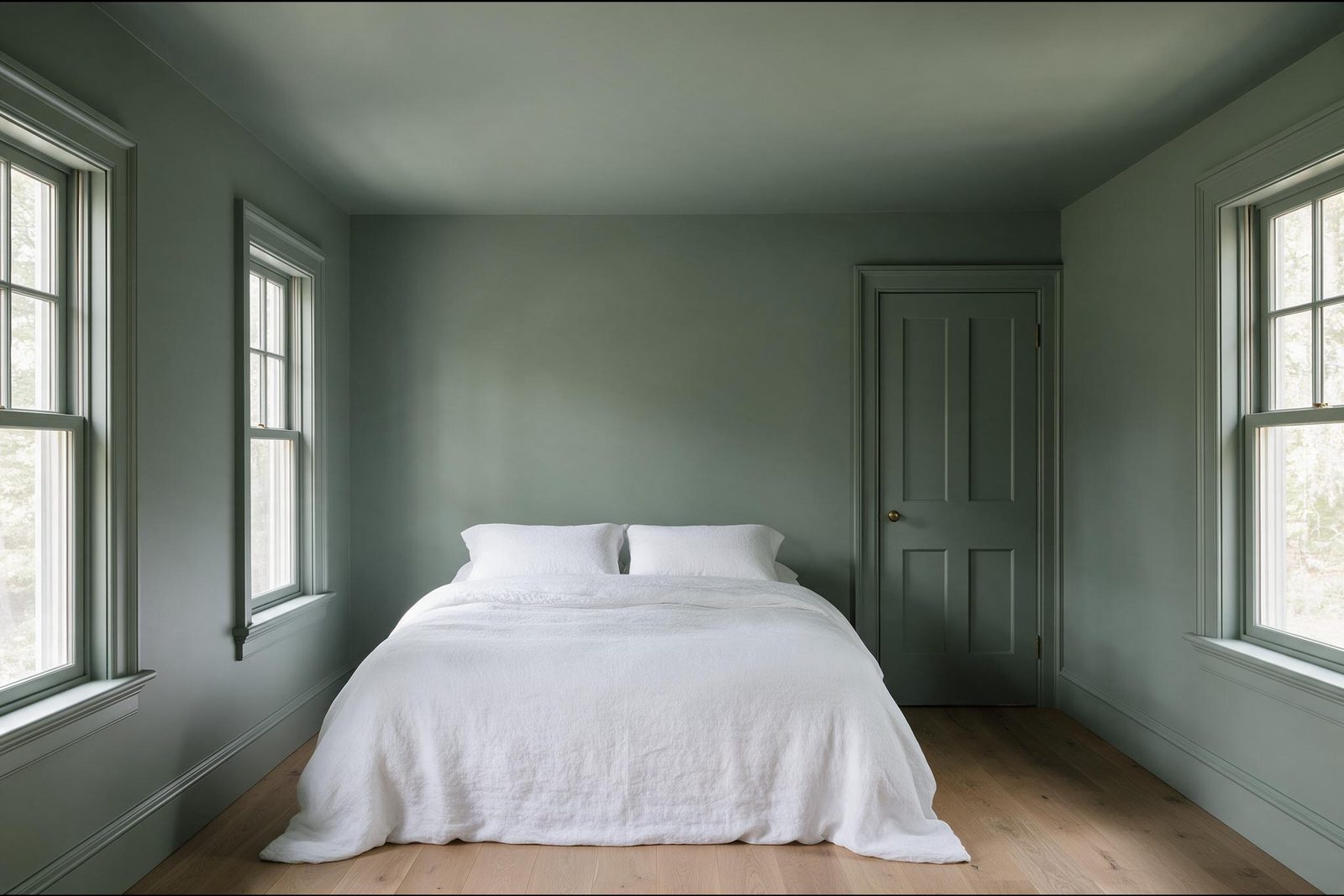
The first time I suggested painting a client's study ceiling green, she laughed. Six weeks later she sent me a photo with the caption "why didn't we do this years ago." That's color drenching: one color on walls, trim, doors and usually the ceiling. It sounds bold. In practice it is one of the calmest things you can do to a room.
Why it works
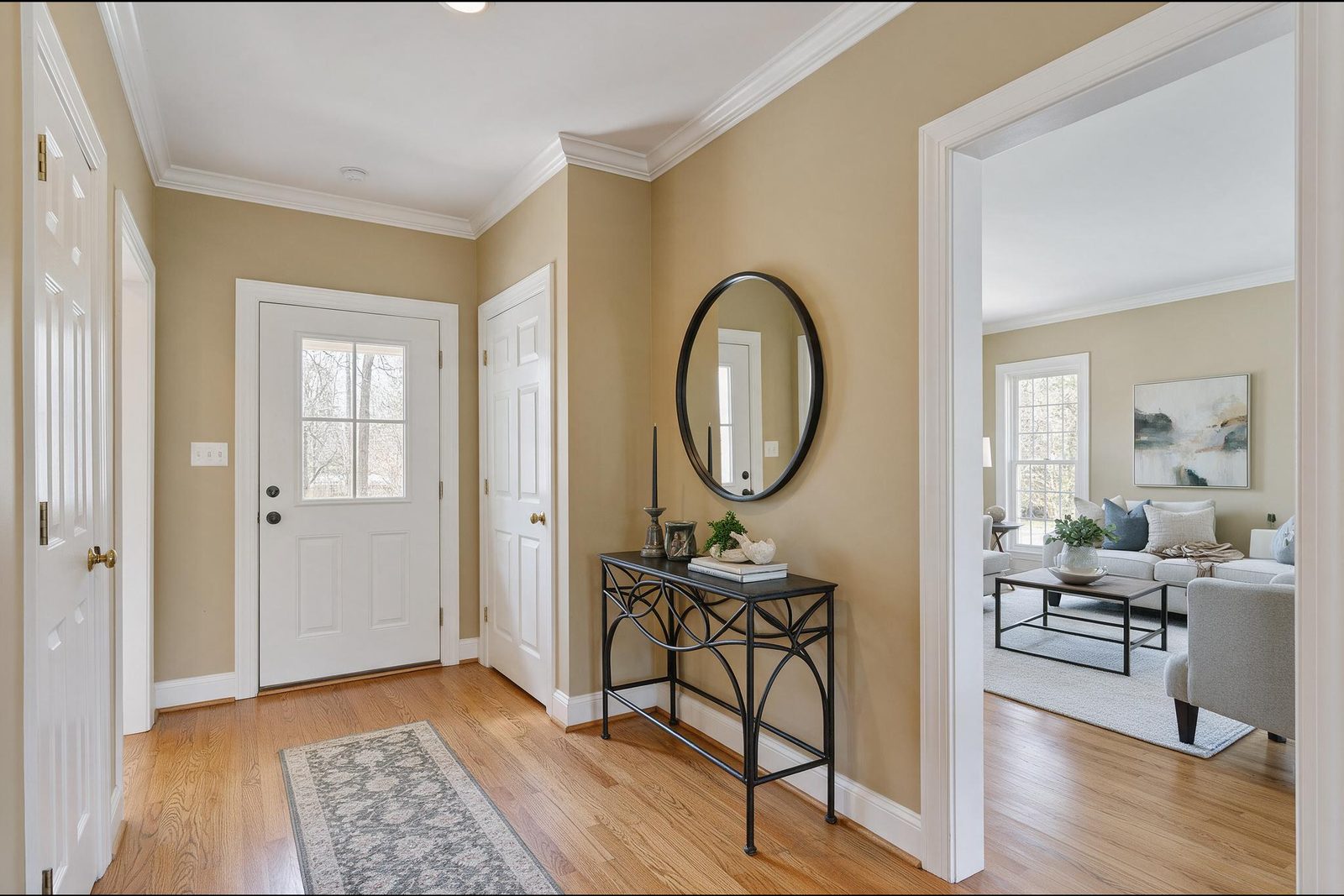
White trim draws a line around every wall, window and door. Your eye follows those lines, and the room feels busy and boxy. Remove the contrast and the edges soften. Small rooms look larger, awkward corners disappear, and the color itself does all the talking.
The best rooms for it
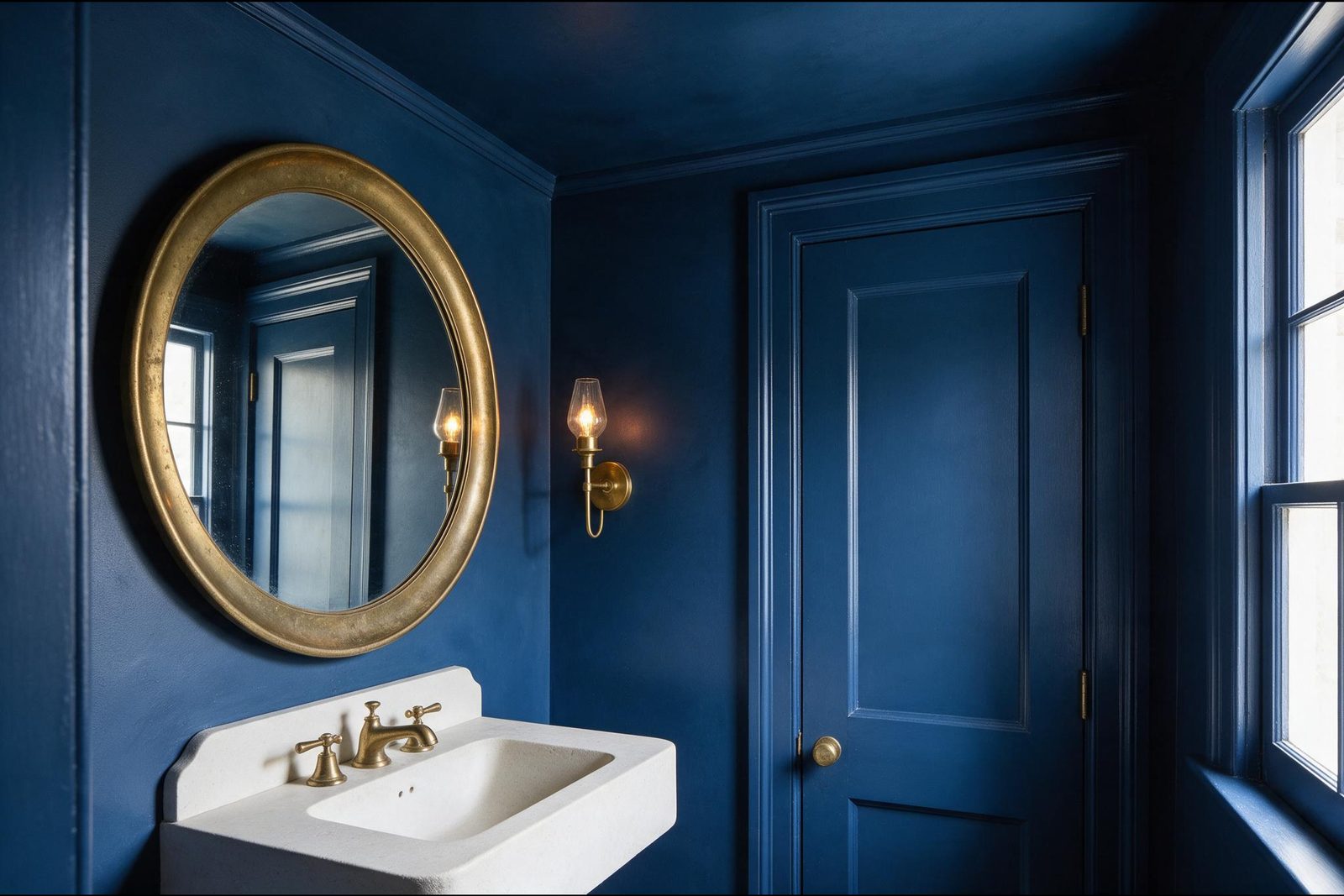
- Powder rooms: small, used briefly, and the perfect place for a deep color.
- Bedrooms: a soft mid-tone drench feels enclosed and restful.
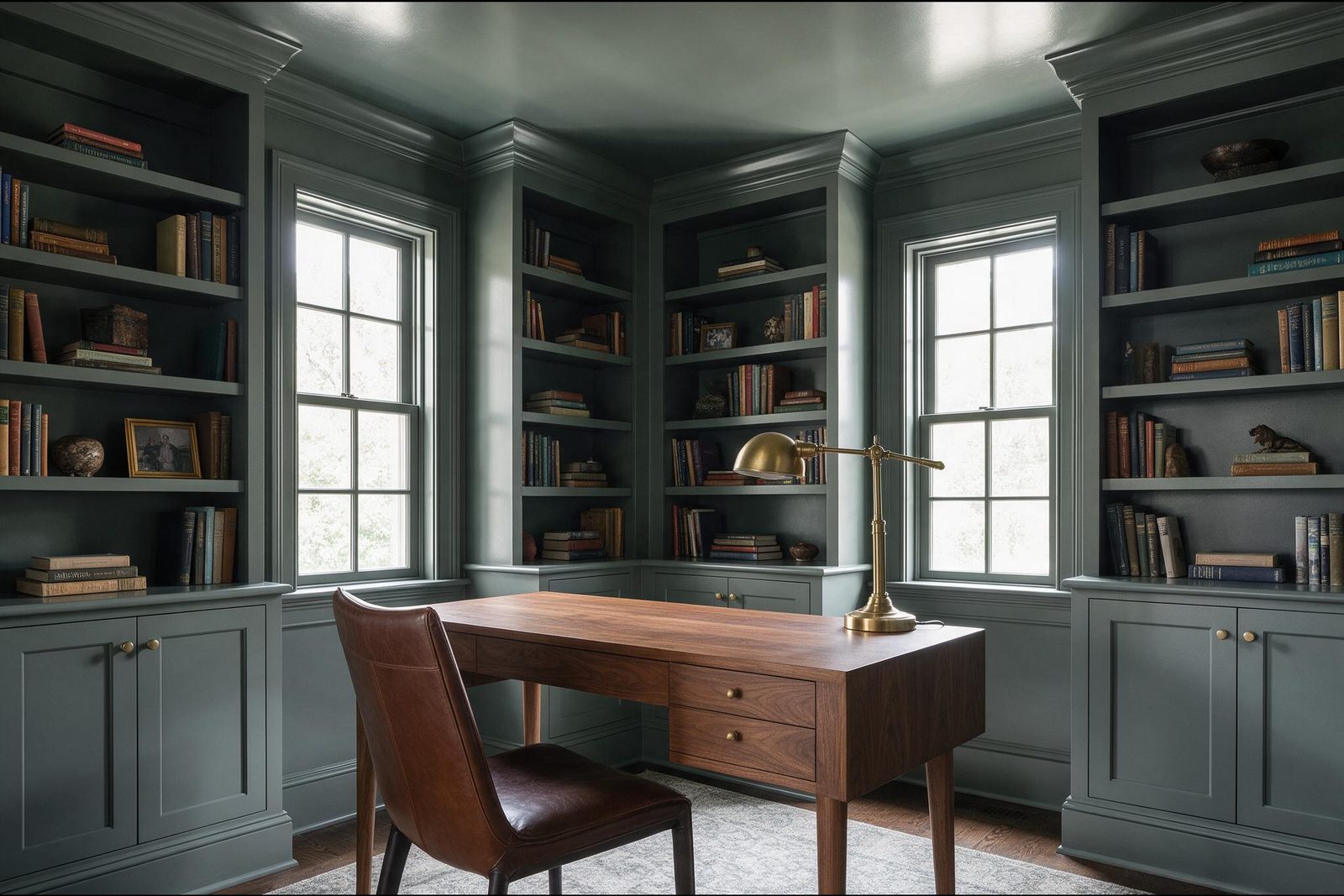
- Offices and libraries: deep greens and blues make built-ins look custom.
- Hallways: a drenched hall turns a corridor into a moment between rooms.
I am more careful in open-plan spaces. If the room has no clear edges, a drench has nowhere to stop.
Colors that drench well
Greyed, slightly muted colors are easiest. Pure, bright colors become overwhelming on every surface.
Sheen does the work trim used to do
With one color everywhere, the sheen gives definition. My standard split:
- Walls: matte.
- Trim, doors, built-ins: eggshell or satin, so they wipe clean and catch a little light.
- Ceiling: flat. If the room is low, mix the wall color 25 to 50 percent lighter for the ceiling.
Light and the rest of the room
A dark drench needs warm lamps (2700K) and something light to rest the eye on: linen, white bedding, a pale rug, brass or wood. A north-facing room takes a deep drench well because it is cool and dim already; leaning into that looks intentional. I wrote more on dark colors in moody paint without the cave.
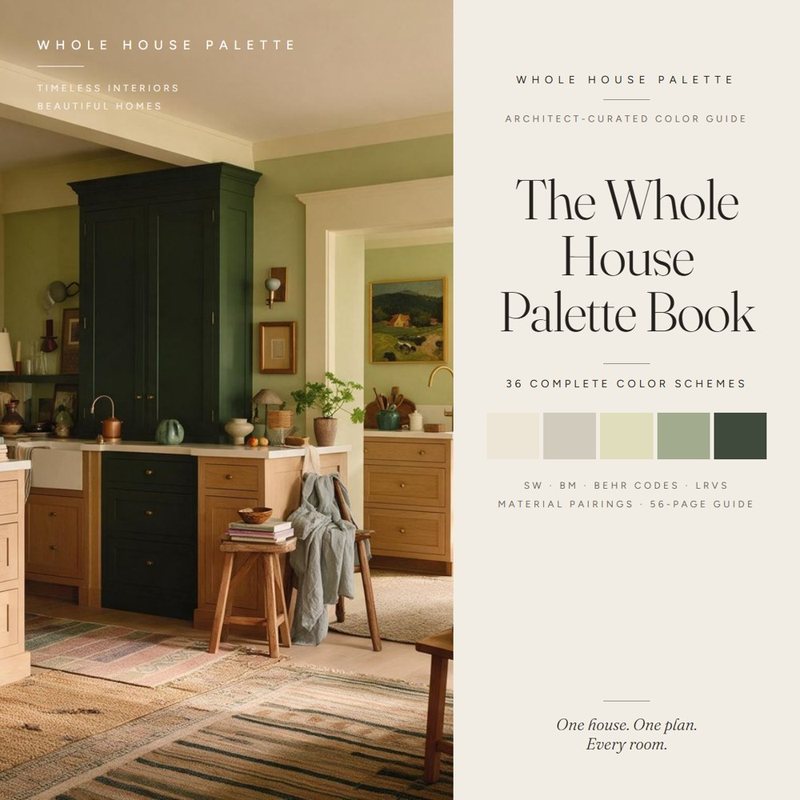
If you want a drenched room that still belongs to the rest of the house, every scheme in my Whole House Palette Book includes one deep color picked to sit with the main neutrals.
Questions I get about this
What is color drenching?
Painting walls, trim, doors, and often the ceiling in the same color, sometimes in two close shades. The room reads as one calm volume instead of walls with a frame around them.
Does color drenching make a room look smaller?
Usually the opposite. Without contrasting trim the corners and edges blur, so a small room feels softer and often larger. A very dark drench feels cozy rather than small.
What sheen should I use for color drenching?
Matte on walls, eggshell or satin on trim and doors so they wipe clean, and flat on the ceiling. The change in sheen gives just enough definition.
Which rooms are best for color drenching?
Powder rooms, bedrooms, home offices, hallways and dining rooms. Rooms you pass through or use in the evening take it best.