How to choose exterior paint colors that match your roof and stone
Start with what you can't change. The order I use with clients, and a cheat table for common roofs.
 Whole House Palette · November 2026
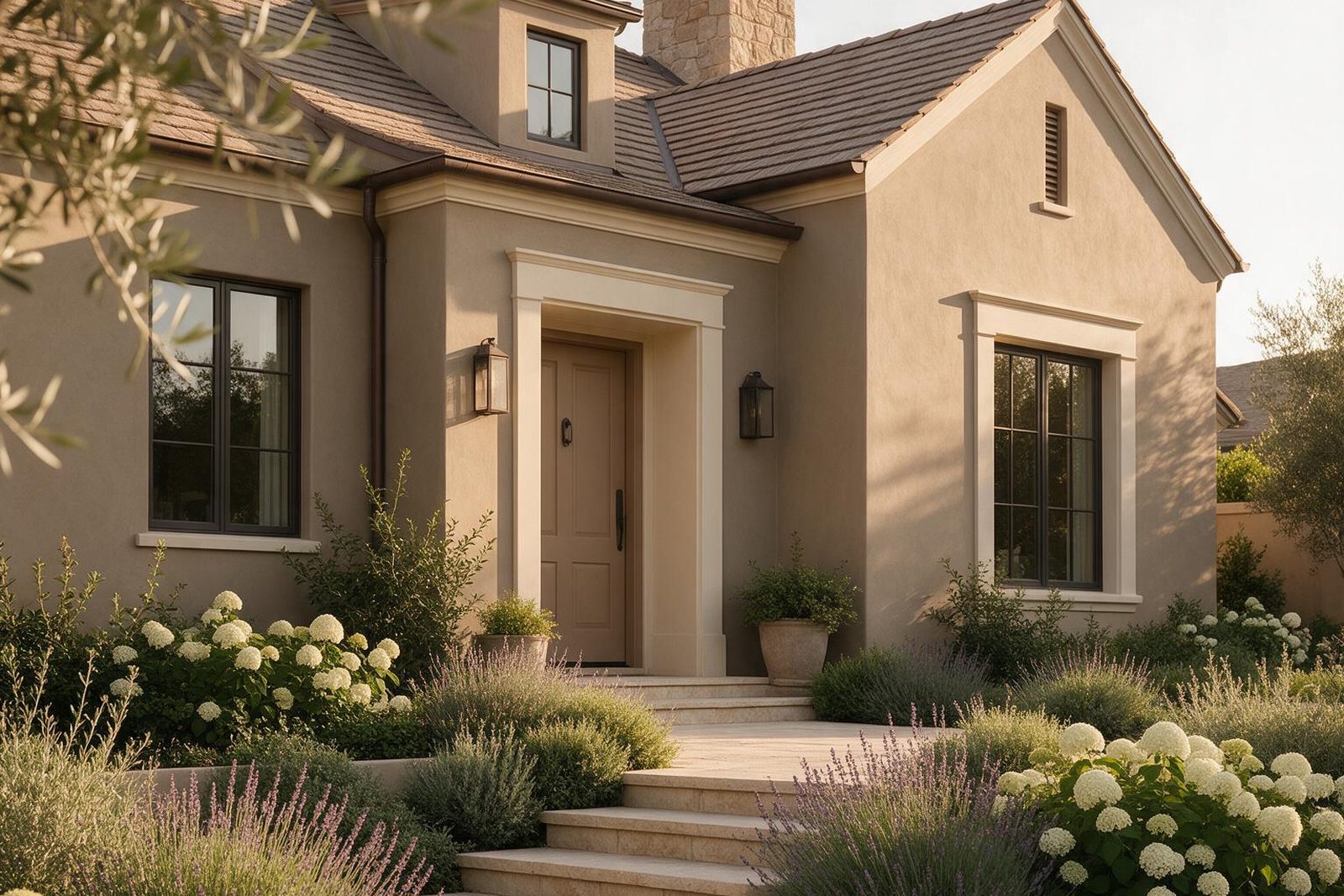
Most people pick exterior paint the way they pick interior paint: they fall in love with a chip. Then the house goes up and the roof suddenly looks purple, or the stone looks yellow. Nothing is wrong with the chip. It just never met the roof.
When I choose exterior colors for a client, I go in a fixed order. It takes the guesswork out, and it stops the most expensive mistake there is: repainting a whole house.
1. List what stays
Walk around the house and write down everything you are not replacing: the roof, stone or brick, window frames, gutters, the driveway, sometimes the front door. These are your fixed colors, and the paint has to agree with them.
2. Find the shared undertone
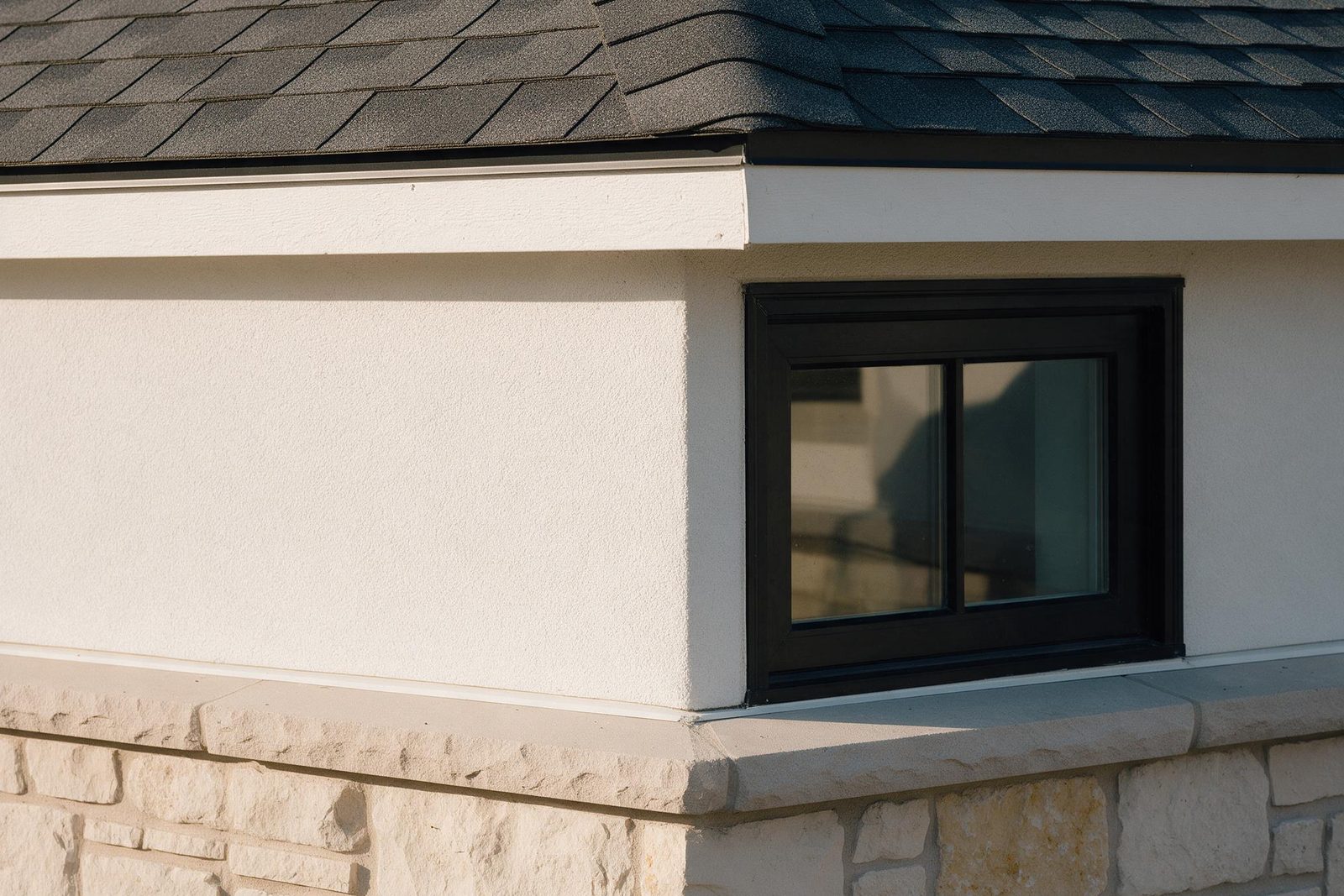
Hold paint chips directly against each fixed material, outside, in daylight. Ignore whether you like the color; look at whether they belong together. Warm stone with a cool grey body looks dirty. A cool slate roof with a yellow-beige body looks dated. Match the family first.
3. Use this table to start
Charcoal or black roof: greige, warm grey, warm white. Try Agreeable Gray or Amazing Gray with Pure White trim.
Brown or weathered-wood roof: beige, taupe, linen. Try Natural Linen or Balanced Beige with Creamy trim.
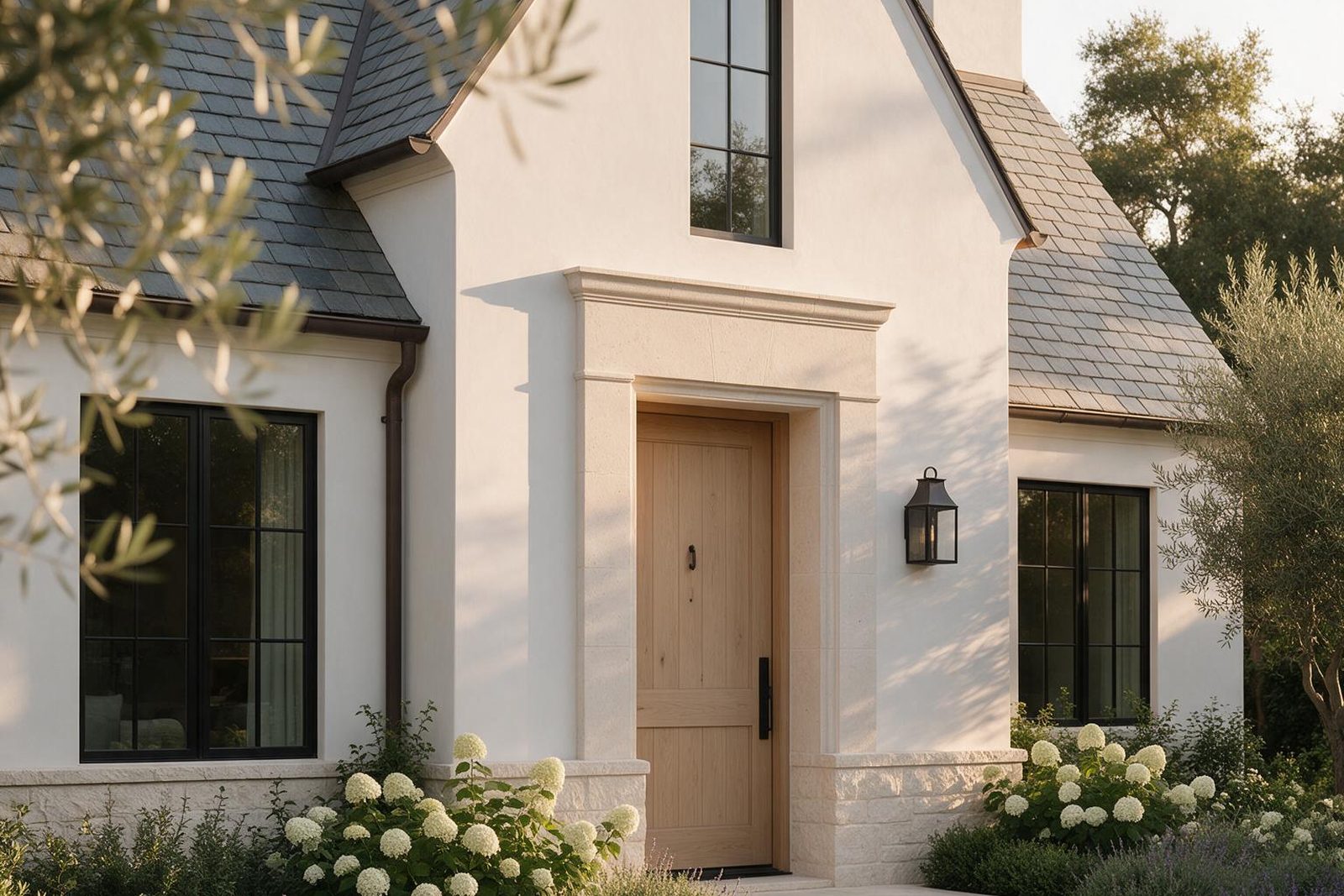
Grey slate or metal roof: warm whites and greige with black metal. Try Alabaster with Tricorn Black windows.
Cream or tan stone: stay warm. Alabaster, Natural Linen, Accessible Beige.
Grey fieldstone: greige and taupe with a slight green-grey lean. Agreeable Gray, Balanced Beige.
Red-orange brick: creamy whites and warm taupe for trim and doors. Avoid cool grey, which makes brick look orange.
4. Check which way the house faces
A south or west front gets hard, warm sun most of the day, and colors look one or two steps lighter. Go deeper there, around LRV 40 to 60. A north front sits in shade, so warm colors keep the house from looking grey and cold.
5. Choose the body, then trim, then the one dark
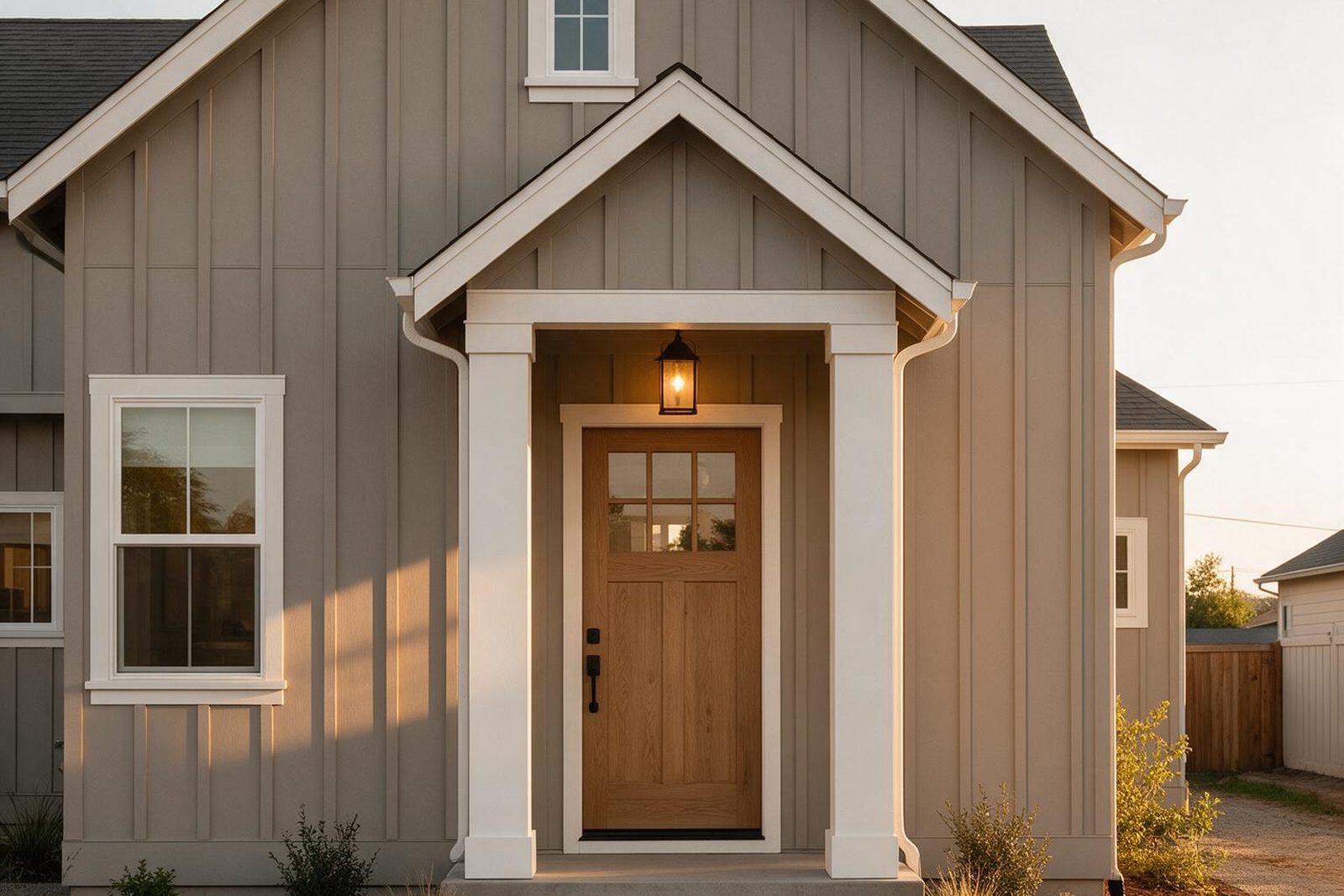
Body first, because it covers the most area. Then trim: a soft white beats a bright one outdoors. Then one dark for the door, windows or garage, ideally the same dark everywhere. Garage doors should blend into the body, not shout.
6. Test big, at three times of day
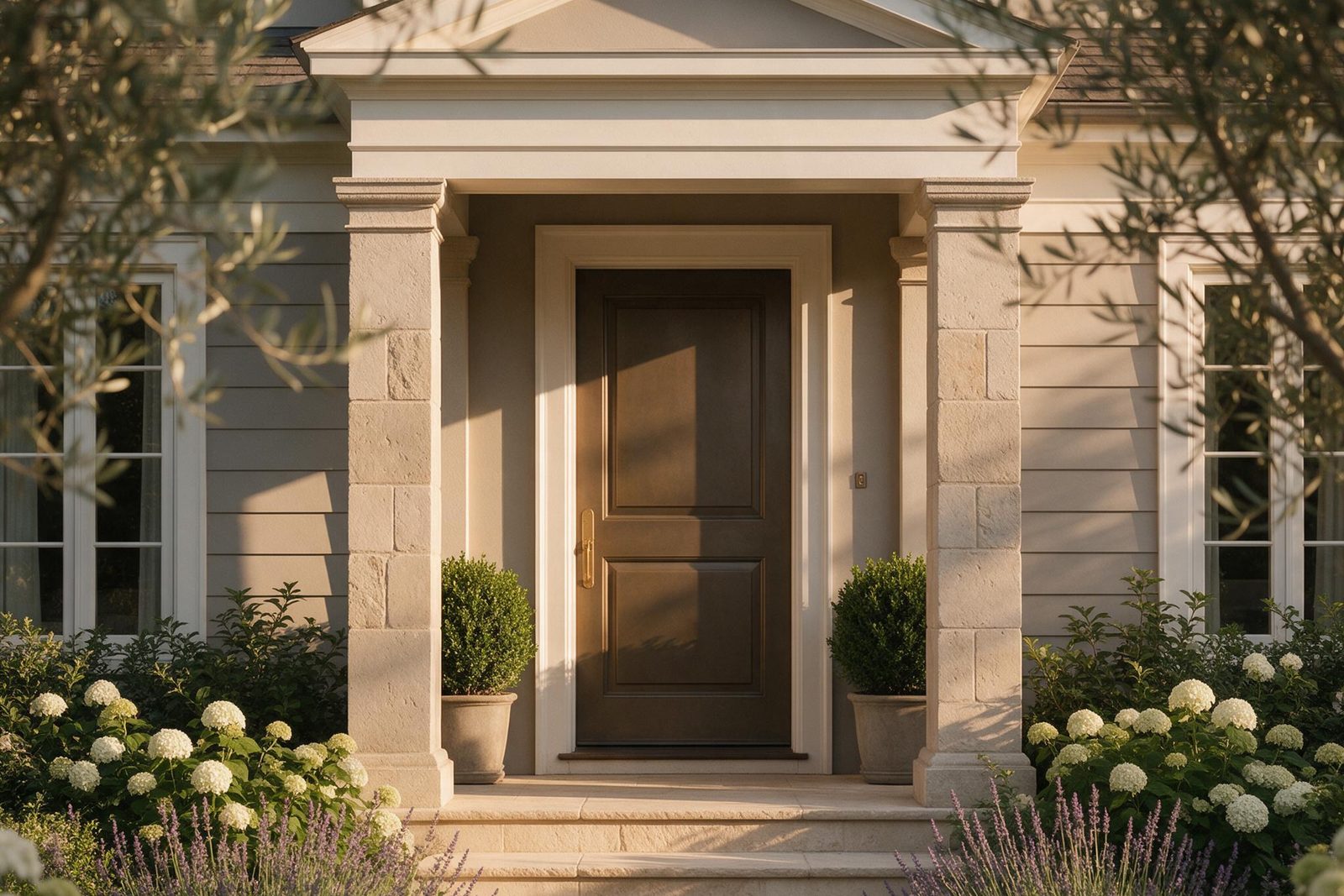
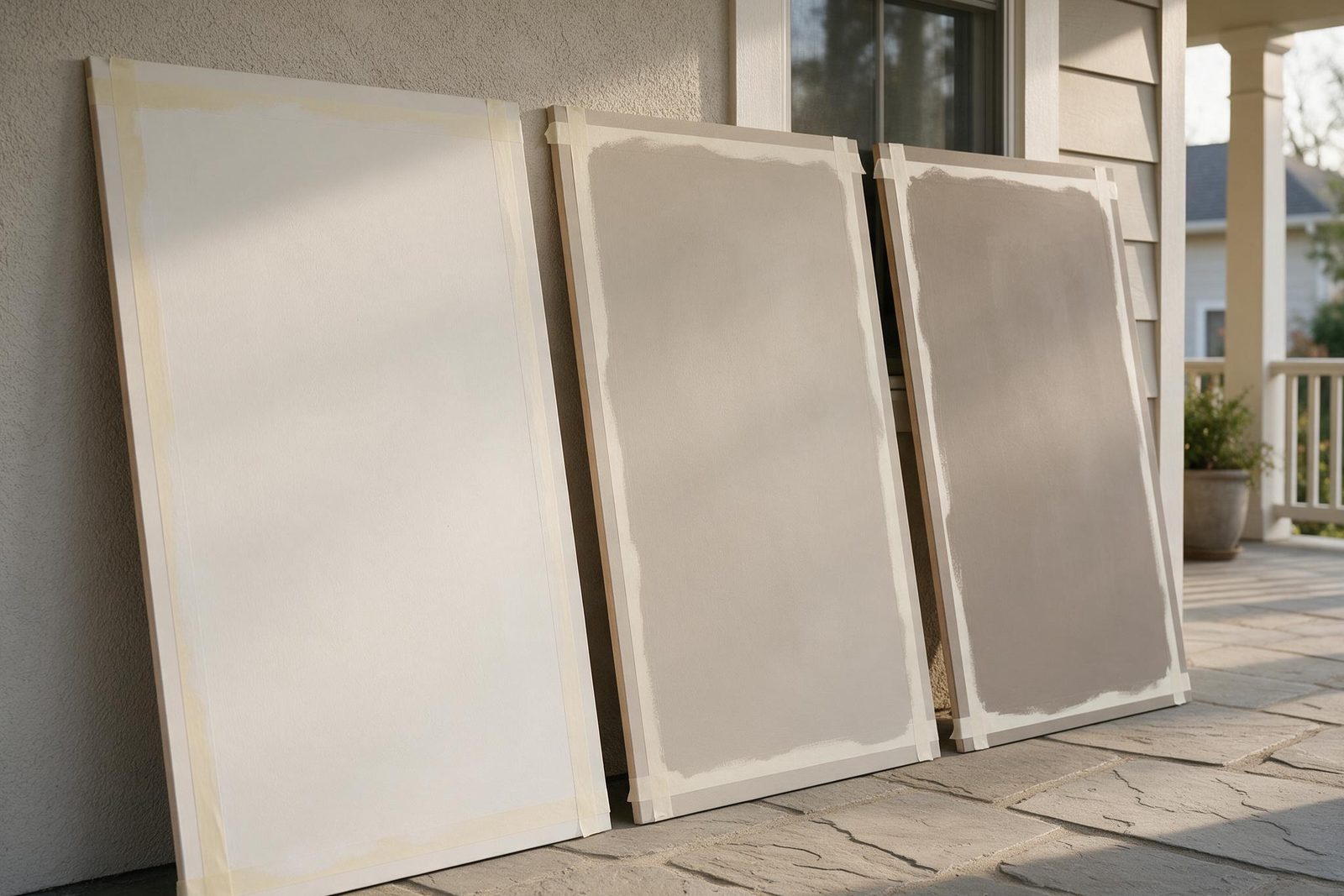
Two coats on 2 by 2 ft boards. Hold them flat against the body wall, beside the roof line and the stone, never against a white fence. Look in the morning, at midday and in the evening, for two days. Then look from the street, 30 ft back, because color reads lighter and greyer at a distance.
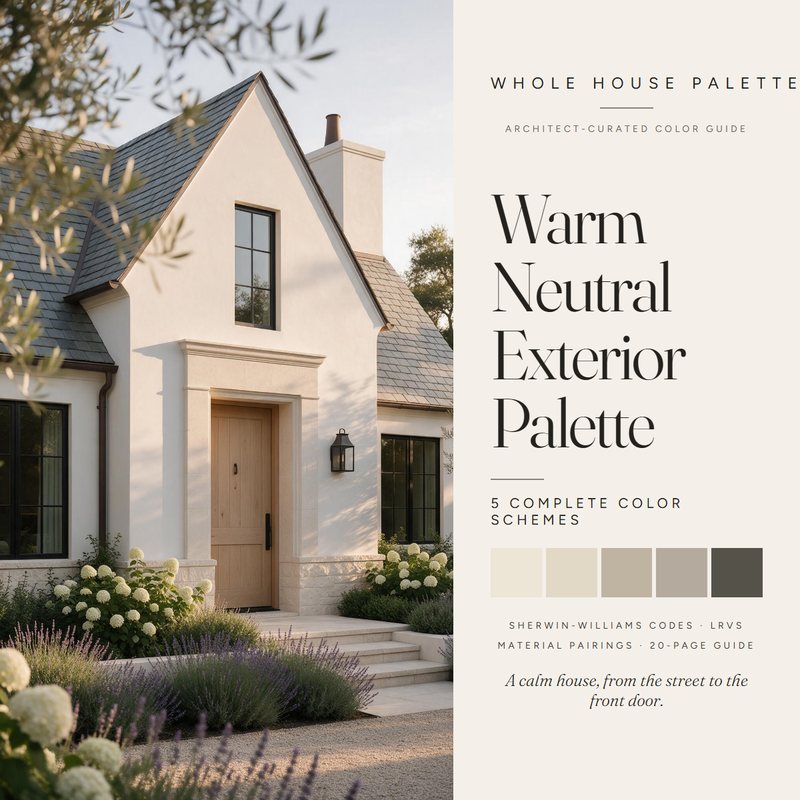
Check your HOA's approved list before you buy samples, and use a quality 100% acrylic exterior paint. If you would rather start from finished schemes, the Warm Neutral Exterior Palette pairs each of its five schemes with the roofs and stones it suits.
Questions I get about this
Should exterior paint match the roof?
It should share the roof's undertone, not copy its color. A warm brown roof wants beige, taupe or creamy white; a charcoal or black roof works with greige, warm grey and crisp warm whites.
What color goes with a charcoal roof?
Greige like Agreeable Gray, warm whites like Alabaster, and deeper greiges like Amazing Gray, with black or bronze windows.
What paint colors go with tan or cream stone?
Stay warm: Alabaster, Natural Linen, Accessible Beige or Balanced Beige. Cool greys next to cream stone make the stone look yellow and the paint look dirty.
What sheen should exterior paint be?
Satin or low-lustre for siding, semi-gloss for trim, and semi-gloss or gloss for the front door. Use flat only on rough stucco.